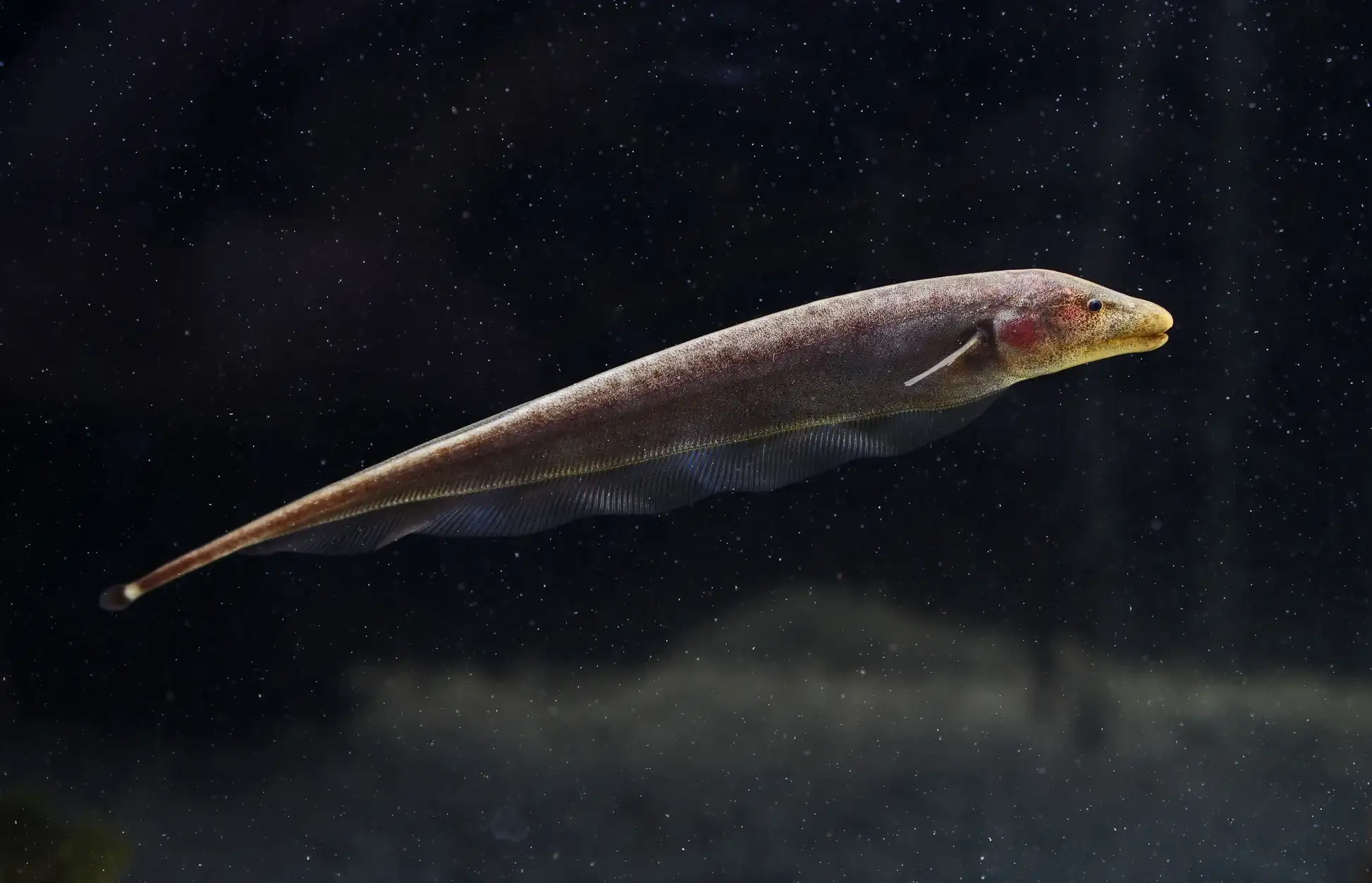
How To Care For Brown Ghost Knife Fish
The Brown Ghost Knife Fish is a fascinating freshwater species known for its elongated body, smooth swimming motion, and ability to generate weak electric signals for navigation and hunting. Unlike the more common Black Ghost Knifefish, this variant has a brownish or darker tone with a more subtle appearance.
They prefer dim lighting and require a tank with plenty of hiding spots such as caves, driftwood, and plants. Maintain stable water conditions with temperatures between 24°C to 28°C and a pH range of 6.0 to 7.5. Clean water and good filtration are essential, as they are sensitive to poor water quality.
Brown Ghost Knife Fish are carnivorous and should be fed a diet of live or frozen foods like bloodworms, blackworms, and insect larvae. They may take pellets over time but prefer protein-rich foods.
They are generally peaceful with other large, non-aggressive fish but can be territorial with their own kind. Being nocturnal, they are most active during the night.
With proper care, they become a unique and intelligent addition to large aquariums, displaying smooth and graceful swimming behavior.
Brown Ghost Knife Fish is a fascinating aquarium fish that stands out with its vibrant colors. It belongs to the family Apteronotidae and is native to the South America.
This species has a care level of Moderate and requires a minimum tank size of 100–150 gallons. It typically reaches a size of 30 – 50 cm (12–20 inches).
Preferred water parameters include a specific gravity (sg) of Freshwater, pH ranging from 6.0 – 7.5, and a temperature between 24°C – 28°C. Additionally, maintaining water hardness within the range of 5–12 dGH is essential.
For stocking, the recommended ratio is 1:2-3 M:F. The Brown Ghost Knife Fish is widely available and has a diverse diet that includes Carnivore (worms, insect larvae, small fish, frozen foods).
With a life span of 10–15 years, this species is known for its very easy care requirements. It is an ideal choice for both beginner and experienced aquarists. Providing a well-maintained tank environment with suitable water conditions will ensure the health and vibrancy of this captivating species.