
The Lateral Line: How Fish Detect Movement and Navigate
Explore how the lateral line helps fish sense movement, navigate their environment, hunt prey, and evade predators in aquatic habitats.
Table of Contents
- What is the Lateral Line?
- How Does the Lateral Line Work
- Navigation and schooling behavior in fish
- The Lateral Line in Predator-Prey Interactions
- Faq
- Conclusion
Fish are very interesting animals that have a wide range of sensory systems, allowing them to adapt themselves to different aquatic environments and settings. This includes very interesting adaptations in a wide variety of ways that allow them to detect movement, vibrations, and changes in water pressure. This highly sensitive system enables fish to navigate through their environment, locate food, and avoid predators extremely accurately.
What is the Lateral Line?
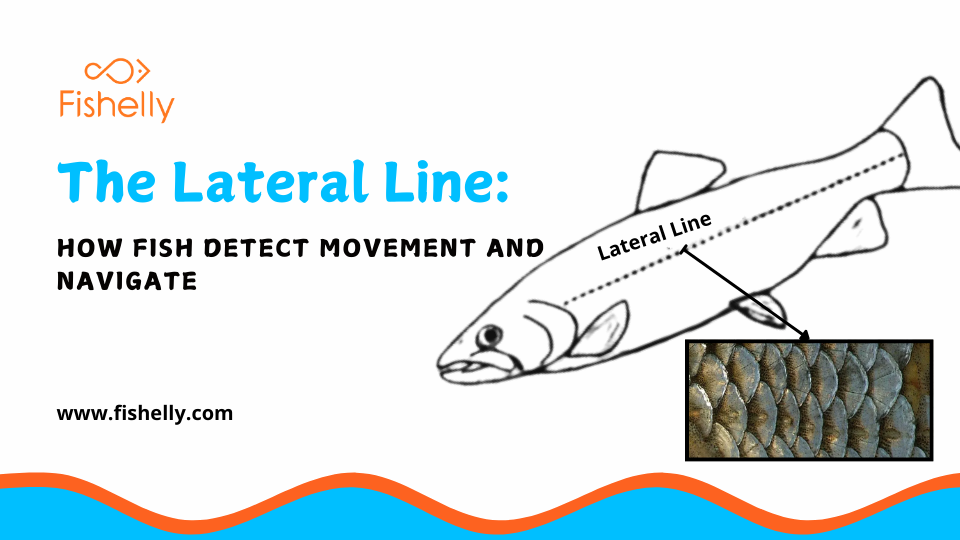
The lateral line is a series of sensory organs that run down the sides of a fish's body, usually from the head to the tail. The lateral line includes a series of fluid-filled canals lined with sensory cells called neuromasts. These are hair-like structures that detect water movements, pressure changes, and vibrations surrounding the fish. So, when water is displaced in any manner due to movements around the fish, it causes the fluid within the canals to base its shifts or displacements, hence signaling the neuromasts to send a signal to the brain.
How Does the Lateral Line Work?
The lateral line can pick out every little disturbance of water and pass on a multitude of signals to the fish:
Movement and Direction: By discerning the movement of water, fish can be aware of an approaching predator or a prey nearby. Fishes can also sense the movement of nearby fish, which is important for schooling behavior.
Water Pressure and Flow: The lateral line assists fish to detect changes in water pressure that may occur due to obstacles, currents, or environmental changes. It is important for avoiding collision with underwater objects and maneuvering around complicated environments such as coral reefs or riverbeds.
Vibrations: The lateral line picks up vibrations effortlessly in the water, which assists fishes in detecting larger creatures or environmental changes that might signal danger to them.
Navigation and schooling behavior in fish
The most interesting aspect of the lateral line is its contribution to fish's ability to navigate and communicate with one another. Fish use the lateral line to keep their positions in schools, detect objects in their surroundings, and to make changes in their movements relative to the group. It is very important for survival in the wild since schooling fish can swim in tight formations to evade predators, locate food, and swim more effectively.
This is done by detecting slight movements and vibrations from other fish, which helps the individual stay in line with the group. Speed and direction are thus changed accordingly. The lateral line in this context acts almost like a communication network that helps fish navigate complex environments while maintaining their position in the school.
The Lateral Line in Predator-Prey Interactions
The lateral line is important for group behavior, but it is also crucial in predator-prey interactions. Fish can detect the approach of predators or the movements of potential prey through their lateral line. For instance, a predator's movement creates ripples or pressure changes in the water, which a fish can detect from afar. This will allow them to evade predators before they can see them, giving them an essential advantage in avoiding danger.
Similarly, prey fish use their lateral line to detect small movements in the water that may indicate the presence of a predator and hence take evasive action.
Faq
1.What is the lateral line in fish?
The lateral line is a sensory system along a fish’s body that detects water movements, pressure changes, and vibrations using sensory cells called neuromasts.
2.How does the lateral line work?
It detects disturbances in the water, sending signals to the fish’s brain to interpret changes in movement, pressure, and vibrations.
3.How do fish use the lateral line to sense movement?
Fish detect nearby movements, predators, or prey by sensing changes in the water using their lateral line.
4.How does the lateral line help fish navigate their environment?
It helps fish detect obstacles, currents, and pressure changes, allowing them to navigate complex environments.
5.How does the lateral line contribute to schooling behavior?
Fish use the lateral line to stay in sync with other fish, adjusting their speed and direction to maintain formation.
6.Can the lateral line help fish avoid predators?
Yes, it detects predator movements through water disturbances, helping fish evade danger.
7.How does the lateral line help fish hunt for prey?
It helps fish detect subtle movements or vibrations of prey, even in low visibility.
8.Is the lateral line important for all fish?
Yes, it is crucial for most fish to detect movement, communicate, and navigate their surroundings.
9.How does the lateral line sense vibrations in the water?
The neuromasts in the lateral line detect water vibrations, sending signals to the fish's brain.
10. Can fish use the lateral line in complete darkness or murky water?
Yes, the lateral line allows fish to sense movement and navigate even in dark or murky conditions.
Conclusion
The lateral line is an extraordinary adaptation that allows fish to detect movement and navigate their aquatic world with precision. By sensing vibrations, pressure changes, and movements in the water, fish can avoid predators, find food, and navigate complex environments with ease. This sensory system is just one of many ways fish have evolved to thrive in diverse and often challenging environments. Understanding how fish detect movement and navigate can greatly broaden our appreciation of life in the water and highlight the incredible adaptability that makes fish such successful animals.


