Male vs Female Angelfish: How to Tell the Difference
Learn how to identify male vs female Pterophyllum scalare using body shape, fins, behavior & breeding traits easily
- Body Shape Difference
- Size & Growth Difference For Angelfish
- Fin Appearance & Texture
- Head Shape & Body Proportion
- Color & Pattern Quality
- Skin Quality (Luster vs Softness)
- Behavior Differences
- Feeding Behavior
- Swimming Style
- Breeding Season Indicators
- Quick Comparison
- Faq
- Conclusion
Angelfish, scientifically known as Pterophyllum scalare, are graceful freshwater fish known for their tall bodies and calm, elegant movement. However, telling males and females apart isn’t easy, especially when they’re young, as the differences are subtle and become clearer only as they mature. With careful observation of their body shape, behavior, and breeding traits, you can identify them more confidently over time.
Body Shape Difference
Body shape is a reliable way to identify the gender of angelfish (Pterophyllum scalare). As they mature, males appear more elongated, slim, and structured, while females develop a wider, fuller, and softer body, especially around the abdomen. These differences relate to their roles—males are built for agility, whereas females have a rounded body suited for egg development.
Male Angelfish – Body Shape Difference
- Slim, vertically elongated body
Males of Pterophyllum scalare tend to develop a taller and more stretched body profile rather than a wide one.
Their height (top fin to bottom fin) is prominent, but the body width remains narrow.
This creates a sleek, upright appearance that looks refined and structured in the aquarium.
- Streamlined and narrow structure
The body appears compressed from the sides, giving a thin and blade-like look.
From the front, males often look slimmer compared to females.
This structure helps them move smoothly and maintain control while swimming.
- Flat and tight abdomen
The belly area remains relatively flat and firm, even as the fish matures.
There is little to no outward bulging in the midsection.
The underside looks straight, maintaining a clean and tight body line.
- Uniform body width
The width of the body remains fairly consistent from head to midsection.
There is no noticeable expansion or fullness in the center of the body.
This creates a straight and balanced silhouette when viewed from the side.
- Angular and defined body lines
Males often show slightly sharper transitions between head, body, and tail.
The edges of the body look more structured rather than soft.
This gives them a bold and slightly dominant visual appearance.
- Lightweight and athletic appearance
Their body mass is lower, making them look lighter and more agile.
Muscle distribution appears compact rather than bulky.
This results in an energetic and active presence in the tank.
- Better support for active movement
Their slim body helps in quicker directional changes.
They often appear more alert, responsive, and slightly territorial.
Swimming looks controlled, straight, and purposeful.
- Less body depth and volume
When viewed from the side, males appear flatter and less thick.
There is less rounding in the mid-body area.
This enhances their streamlined and elegant look.
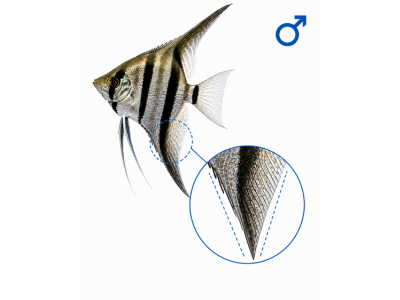
Overall Impression: Sleek, narrow, vertically tall, and slightly sharp in appearance
Female Angelfish – Body Shape Difference
- Rounder and fuller body shape
Female Pterophyllum scalare develop a deeper and wider body compared to males.
The midsection expands outward, giving a more filled and balanced look.
Their structure appears softer and less elongated.
- Broader and more expanded midsection
The body noticeably widens around the center area.
This makes females look heavier through the torso compared to the head and tail.
The shape feels more natural and less linear.
- Soft and rounded abdomen
The belly area becomes slightly rounded, especially during breeding periods.
This is due to egg development inside the body.
Even outside breeding, the abdomen is less flat than in males.
- Visible belly fullness
From certain angles, especially front or slight top view, a gentle belly curve is visible.
This fullness becomes more obvious when the fish is ready to spawn.
The underside appears curved rather than straight.
-
Non-uniform body width
The body is not evenly narrow throughout.
It widens after the head and may taper again toward the tail.
This creates a more organic and less streamlined silhouette.
-
Smooth and curved body lines
Edges of the body are softer with gentle transitions.
There are no sharp angles between head, body, and tail.
This gives females a calm and graceful visual flow.
-
Heavier and more substantial build
Females carry more body mass, especially in the midsection.
They appear thicker and slightly bulkier than males.
This gives a strong yet peaceful presence in the aquarium.
-
Movement suited for stability
Due to their fuller body, movement appears slower and more gliding.
They don’t show the same sharp agility as males.
Swimming looks calm, steady, and controlled.
-
Greater depth and volume
From the side view, females appear thicker and more rounded.
There is noticeable depth in the body compared to males.
This enhances their full-bodied and mature appearance.
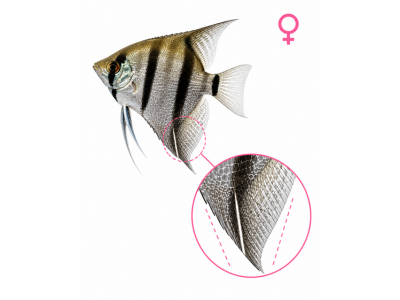
Overall Impression: Wide, rounded, soft, and naturally balanced in appearance
Observation Tip
When observing Pterophyllum scalare:
-
From the front view, males appear thinner and more compressed, while females look slightly wider
-
From the side view, males look flat and straight, whereas females show a gentle belly curve
-
Differences become much clearer with age, especially when females approach breeding condition
With time and careful observation, the contrast between the slim, structured male and the fuller, rounded female becomes easy to recognize.
Size & Growth Difference For Angelfish
When it comes to size and growth, gender differences in angelfish are not always about exact measurements like length or weight. In Pterophyllum scalare, the distinction is more about how size appears visually through body structure, fin development, and overall presence in the tank. As they mature, males and females grow differently, creating a noticeable contrast in how “big” they look rather than how big they actually are.
Male Angelfish – Size & Growth Difference
Male angelfish often appear larger and more dominant, not necessarily because they weigh more, but because of their elongated structure and extended fins. Their growth pattern emphasizes height and length, giving them a striking and noticeable presence in the aquarium.
• Appear taller due to longer fins
Males develop longer dorsal and anal fins
This increases their vertical height significantly
• Elongated body gives larger impression
Body stretches more from head to tail
Makes them look bigger even if actual mass is similar
• Growth appears faster visually
Their slim and stretched shape makes growth more noticeable
They seem to “outgrow” others in appearance
• More dominant tank presence
Tall structure and sharp profile make them stand out
Often look more commanding and noticeable
• Less bulk but more length
Growth focuses on length and fin extension
Body remains relatively slim rather than thick
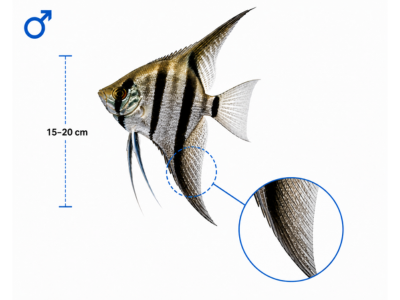
Overall Impression: Taller, longer, and visually larger due to structure not weight
Female Angelfish – Size & Growth Difference
Female angelfish grow in a way that emphasizes body mass and width rather than height or length. While they may not appear as tall as males, their fuller structure gives them a heavier and more solid appearance, especially as they reach maturity.
• Body appears thicker and fuller
Females develop more mass in the midsection
Gives a dense and filled-out look
• Look shorter but wider
They may not grow as tall as males
But appear broader across the body
• Belly becomes more visible during breeding
Abdomen expands as eggs develop
Makes size difference more obvious
• Growth noticeable in body width
Increase in size is seen more in thickness than length
Creates a rounded and balanced structure
• Heavier visual weight
Even if length is similar, they look bulkier
Presence feels more grounded than dominant
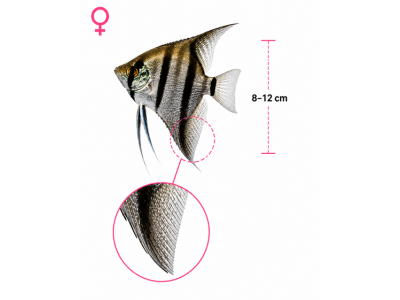
Overall Impression: Shorter-looking, wider, and heavier in appearance due to body mass
Observation Tip
When observing Pterophyllum scalare:
-
Males look taller and longer because of fin extension and body stretch
-
Females look wider and fuller, especially around the belly
-
During breeding, females appear noticeably bulkier, making identification easier
Over time, these growth differences become more visible, helping you distinguish between male and female angelfish with better accuracy.
Fin Appearance & Texture
Fin structure is another helpful visual cue when identifying the gender of angelfish. In Pterophyllum scalare, fins are not just for movement—they also reflect personality, dominance, and maturity. While both males and females have elegant, flowing fins, subtle differences in length, sharpness, and texture become more noticeable as they grow. Males tend to display longer and more pointed fins, giving them a bold and striking look, whereas females show softer, shorter, and more balanced fin shapes that complement their overall body structure.
Male Angelfish - Fin Appearance & Texture
Male angelfish are often recognized by their longer and more pronounced fins, which enhance their dominant and eye-catching presence in the aquarium. Their fin structure appears more extended and defined, especially as they mature.
• Long and pointed dorsal & anal fins
Fins extend higher and lower compared to females
Tips appear sharper and more pronounced
• Sharp and defined fin edges
Edges look clean, structured, and slightly rigid
Gives a crisp and bold visual outline
• Wide fin display during dominance
Males often spread their fins fully when asserting territory
Creates a larger and more intimidating appearance
• Extended fin length overall
Fins appear more stretched and elongated
Enhances their tall and striking profile
• Slightly rigid texture
Fins may look firmer rather than soft
Adds to their sharp and structured look
• Visually dramatic appearance
Fin shape makes them stand out in the tank
Overall look feels bold, active, and attention-grabbing
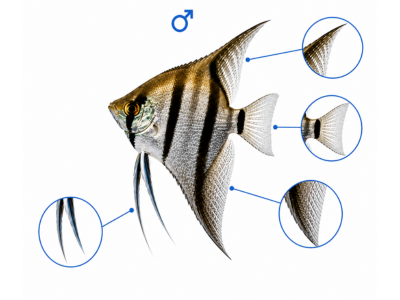
Overall Impression: Long, sharp, extended fins with a bold and dominant presence
Female Angelfish – Fin Appearance & Texture
Female angelfish display a softer and more balanced fin structure that complements their fuller body shape. Their fins are less exaggerated, giving them a calm and graceful appearance.
• Shorter and slightly rounded fins
Fins are not as long or extended as males
Tips appear softer and less pointed
• Smooth and gentle fin edges
Edges look rounded and less defined
Creates a softer visual outline
• Balanced fin-to-body proportion
Fins blend naturally with the body shape
No exaggerated extensions or sharp features
• Less dramatic fin spread
Females rarely flare fins aggressively
Display appears calm and controlled
• Soft and flexible texture
Fins look more delicate and flowing
Enhances their graceful swimming style
• Elegant and harmonious appearance
Overall look feels smooth and composed
More graceful than bold in presence
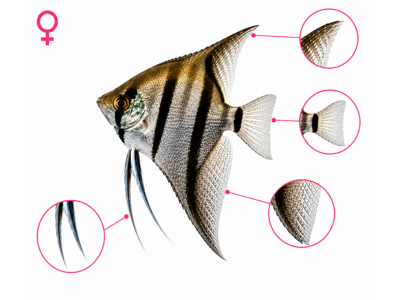
Overall Impression: Shorter, softer, and rounded fins with a calm and elegant look
Observation Tip
When observing Pterophyllum scalare:
-
Males show longer, sharper fins that often spread wide
-
Females have shorter, smoother fins that blend with the body
-
Differences become clearer as fins fully develop with age
With time, fin shape and texture become a reliable secondary indicator alongside body shape for identifying male and female angelfish.
Head Shape & Body Proportion
Head shape and overall body proportion are subtle yet useful indicators when identifying the gender of angelfish. In Pterophyllum scalare, these differences become more noticeable as the fish mature. While both genders share the same basic structure, males tend to develop a more defined and angular head, whereas females maintain a smoother and more rounded appearance. Observing the head profile from the side can often reveal these distinctions more clearly.
Male Angelfish - Head Shape & Body Proportion
As male angelfish mature, their head structure becomes more pronounced and structured, giving them a sharper and slightly dominant look.
• Slight forehead bump (nuchal hump)
Some mature males may develop a small bump above the eyes
This is not always present but can be a strong indicator
• Angular and slightly pointed head
Head shape appears more structured rather than rounded
Gives a sharper facial outline
• Strong and pronounced face
Facial features look more defined and bold
Adds to their dominant appearance
• Sharper side profile
From the side view, the head appears more slanted and firm
Creates a clear and noticeable head-to-body transition
• More structured body proportion
Head appears slightly larger or more prominent compared to body
Enhances their overall bold and confident look
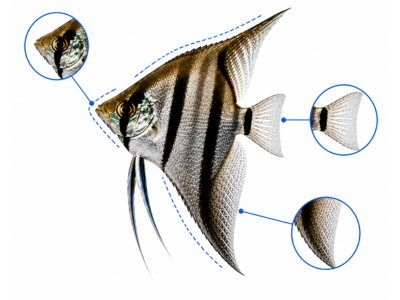
Overall Impression: Sharp, defined, and slightly angular head with a strong profile
Female Angelfish – Head Shape & Body Proportion
Female angelfish retain a softer and more natural head shape, which blends smoothly with their overall body structure.
• No forehead bump
Females typically do not develop a nuchal hump
Forehead remains smooth and even
• Rounded and balanced head shape
Head appears curved and gentle rather than angular
Creates a soft facial outline
• Subtle and less pronounced face
Facial structure looks delicate and natural
Does not appear bold or sharp
• Gentle side profile
Head transitions smoothly into the body
No sharp angles or strong slopes
• Balanced body proportion
Head size blends evenly with body width
Maintains a harmonious and calm appearance
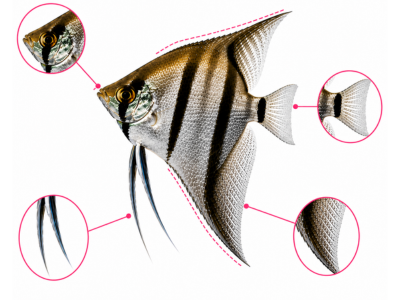
Overall Impression: Smooth, rounded, and naturally balanced head with a soft profile
Observation Tip
When observing Pterophyllum scalare:
-
Males may show a slight forehead bump and sharper head angles
-
Females have a smooth, rounded head with no visible bump
-
Side profile is the best way to notice these differences
These features are subtle and may vary between individuals, but with careful observation, head shape becomes a helpful indicator when combined with other traits.
Color & Pattern Quality
Color and pattern differences in angelfish are usually subtle, but they can still offer useful clues when identifying gender. In Pterophyllum scalare, both males and females can display beautiful markings depending on genetics, diet, and environment. However, slight variations in color intensity, contrast, and visual impact are often observed especially during active or breeding periods.
Male Angelfish – Color & Pattern Quality
Male angelfish often appear slightly more vibrant and visually striking, particularly when they are active, establishing territory, or engaging in courtship behavior.
• Brighter and more intense colors
Colors may appear more vivid compared to females
Pigmentation looks slightly stronger under good lighting
• High contrast patterns
Stripes or markings appear more defined and bold
Creates a sharper visual separation between colors
• Color enhancement during activity
Colors may become richer during dominance or courtship
This temporary boost makes them stand out more
• Bold and eye-catching appearance
Overall look feels more striking and attention-grabbing
Enhances their presence in the aquarium
• Dynamic visual changes
Color intensity can shift slightly based on mood or behavior
Adds to their active and expressive nature
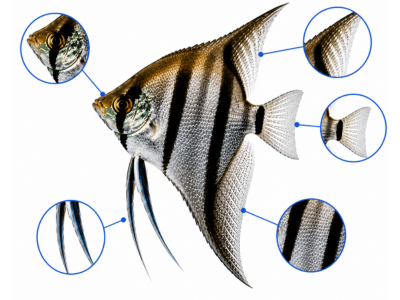
Overall Impression: Brighter, high-contrast, and visually bold with dynamic color presence
Female Angelfish – Color & Pattern Quality
Female angelfish typically display a more stable and naturally balanced coloration, giving them a calm and elegant appearance in the tank.
• Softer and more consistent colors
Colors appear slightly muted or less intense
Maintain a steady tone over time
• Balanced and smooth patterns
Markings blend more naturally with the body
Edges look less sharp compared to males
• Minimal change during behavior
Color does not fluctuate significantly with mood
Remains stable even during activity
• Calm and elegant visual appeal
Overall appearance feels gentle and composed
Less dramatic but more harmonious
• Natural color presentation
Reflects a steady and relaxed state
Enhances their peaceful presence in the aquarium
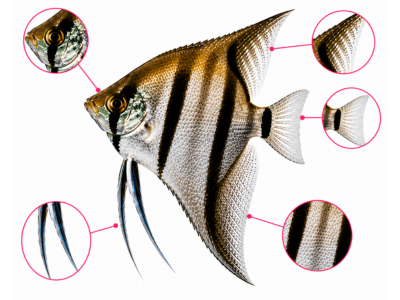
Overall Impression: Soft, balanced, and consistent colors with a calm and elegant look
Observation Tip
When observing Pterophyllum scalare:
-
Males may show brighter, more intense colors, especially during activity
-
Females tend to have softer, stable coloration
-
Differences are subtle and influenced by lighting, diet, and mood
Color alone is not a definitive indicator, but when combined with body shape and fin structure, it can help you better distinguish between male and female angelfish.
Skin Quality (Luster vs Softness)
Skin appearance is a subtle but interesting factor when observing gender differences in angelfish. In Pterophyllum scalare, the skin (or scale surface) can reflect light differently depending on structure, health, and behavior. While this is not a primary identification trait, experienced fishkeepers often notice a slight contrast in luster between males and females, especially under good lighting conditions.
Male Angelfish – Skin Quality
Male angelfish may show a slightly more reflective and glossy skin appearance, which adds to their bold and striking presence in the aquarium.
• Slightly shiny and reflective surface
Skin reflects light more noticeably
Creates a mild glossy or polished effect
• Enhanced scale visibility
Individual scales may catch light, making texture more visible
Adds a crisp and defined look
• Brighter appearance under lighting
Looks more vibrant when aquarium lighting hits the body
Enhances overall visual impact
• Supports dominant visual presence
Shine adds to their bold and attention-grabbing look
Complements their sharp body structure
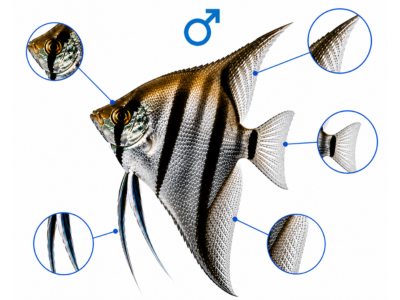
Overall Impression: Slightly glossy, reflective, and visually striking
Female Angelfish – Skin Quality
Female angelfish tend to have a softer and more matte skin appearance, which aligns with their overall calm and balanced look.
• Soft and less reflective surface
Skin appears more matte with minimal shine
Light reflection is subtle and diffused
• Smoother visual texture
Scales blend together, giving a uniform appearance
Less sharp or glossy highlights
• Natural and gentle look
Appearance feels calm and easy on the eyes
Matches their rounded body structure
• Consistent visual tone
Skin does not show strong shine changes under lighting
Maintains a steady and soft presence
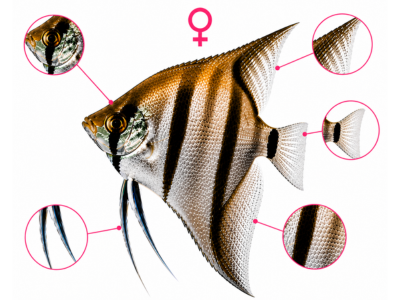
Overall Impression: Smooth, matte, and naturally soft in appearance
Observation Tip
When observing Pterophyllum scalare:
-
Males may show a slight shine or gloss, especially under strong lighting
-
Females appear more matte and soft with less reflection
-
This difference is subtle and best noticed in healthy, well-lit fish
Skin quality alone is not a definitive indicator, but when combined with body shape, fins, and behavior, it can add another layer of understanding when identifying angelfish gender.
Behavior Differences
Behavior is one of the most noticeable and practical ways to understand gender differences in angelfish. In Pterophyllum scalare, personality and interaction within the tank often reveal subtle clues that physical traits alone may not. While both males and females can show aggression or calmness depending on the situation, their natural tendencies become more apparent as they mature—especially when territory or breeding is involved.
Male Angelfish – Behavior Differences
Male angelfish are generally more active, territorial, and dominant in their behavior. Their actions often revolve around establishing control and maintaining space within the aquarium.
• More territorial and dominant
Males tend to claim specific areas in the tank
They actively defend their space from other fish
• Chasing and confronting behavior
May chase tank mates, especially other males
Short bursts of aggression are common
• Display behavior (fin spreading)
Frequently spread fins wide to appear larger
Used as a warning or dominance signal
• Active role in territory protection
Continuously patrol their chosen area
Stay alert and responsive to movement
• Higher activity levels
Often swim more actively and explore the tank
Appear energetic and sometimes restless
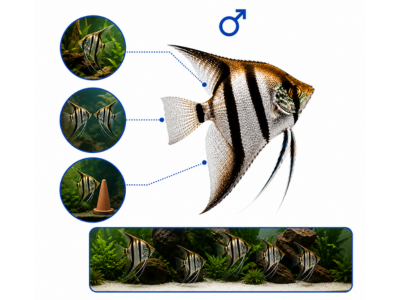
Overall Impression: Active, territorial, dominant, and highly responsive
Female Angelfish – Behavior Differences
Female angelfish usually display a calmer and more stable behavior pattern, focusing more on balance and care rather than dominance.
• Generally calm and stable
Females spend more time swimming peacefully
Less likely to engage in unnecessary aggression
• Aggression mainly during breeding
Become protective when laying or guarding eggs
Aggression is focused and purposeful
• Focus on egg care and protection
Take an active role in cleaning and guarding eggs
Stay close to the breeding area
• Less involvement in conflict
Avoid chasing or confronting other fish
Prefer maintaining a peaceful environment
• Smooth and controlled movement
Swimming appears slower and more graceful
Reflects a calm and composed nature
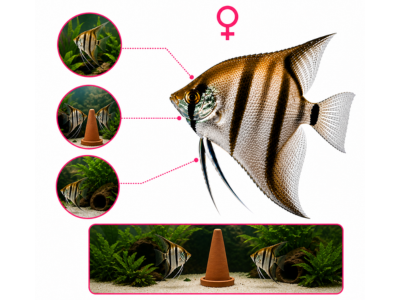
Overall Impression: Calm, stable, protective, and focused on care rather than dominance
Observation Tip
When observing Pterophyllum scalare:
-
Males are more territorial and active, often displaying dominance
-
Females are generally calmer, becoming aggressive mainly during breeding
-
Behavioral differences are most noticeable when fish are mature or paired
Watching behavior over time can give you strong clues about gender, especially when combined with physical traits like body shape and fins.
Feeding Behavior
Feeding time often reveals subtle personality and gender-based differences in angelfish. In Pterophyllum scalare, both males and females are opportunistic eaters, but their approach to food can vary. These differences become more noticeable in group setups, where competition, dominance, and calmness influence how each fish reacts during feeding.
Male Angelfish – Feeding Behavior
Male angelfish tend to be more competitive and energetic during feeding time, often showing urgency and dominance when food is introduced.
• Highly competitive feeding style
Males often rush toward food as soon as it enters the tank
They try to secure food quickly before others
• Quick response to food
React faster to movement or feeding cues
Usually the first to reach the food
• Dominates feeding space
May push or chase other fish away
Claims the area where food is available
• Active and energetic eating
Feeding is fast, sharp, and sometimes aggressive
Creates noticeable movement in the tank
• Less patient approach
Focus is on grabbing food quickly rather than evenly
Can lead to uneven food distribution in community tanks
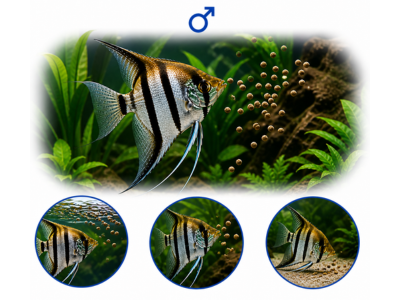
Overall Impression: Fast, competitive, dominant, and highly active during feeding
Female Angelfish – Feeding Behavior
Female angelfish usually display a calmer and more controlled feeding behavior, focusing on steady intake rather than competition.
• Calm and steady feeding style
Approach food without rushing or sudden movements
Maintain a composed feeding pattern
• Eats without urgency
Do not compete aggressively for food
Take time to consume available food
• Avoids aggressive competition
May step back if other fish become too dominant
Prefers a peaceful feeding space
• Balanced and consistent intake
Eat at a steady pace rather than in bursts
Helps maintain a natural rhythm
• Gentle movement during feeding
Feeding behavior appears smooth and controlled
Reflects their overall calm nature
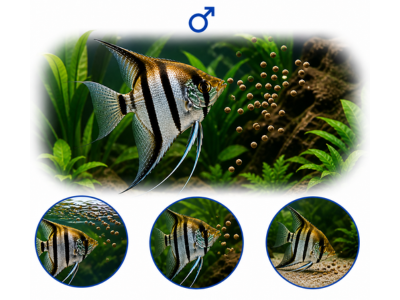
Overall Impression: Calm, steady, balanced, and non-aggressive during feeding
Observation Tip
When observing Pterophyllum scalare during feeding:
-
Males are usually first to react and dominate food areas
-
Females tend to eat calmly and avoid conflict
-
In mixed tanks, males may outcompete females if food is limited
Watching feeding behavior over time can give useful insights into gender, especially when combined with physical and behavioral traits.
Swimming Style
Swimming style is a subtle but very telling trait when observing angelfish behavior. In Pterophyllum scalare, movement reflects not just physical structure but also personality and role within the tank. While both males and females are graceful swimmers, their pace, direction, and energy levels often differ—especially as they mature.
Male Angelfish – Swimming Style
Male angelfish tend to display a more active and assertive swimming style, often reflecting their territorial and dominant nature.
• Active and slightly aggressive movement
Males swim with higher energy levels
Movements often feel purposeful and alert
• Sharp and direct swimming pattern
Swimming paths are straight and intentional
Less drifting, more controlled direction
• Quick turns and sudden movements
Frequently change direction with speed
React quickly to other fish
• Energetic tank presence
Constant movement makes them more noticeable
Adds a dynamic feel to the aquarium
• Exploratory and responsive behavior
Actively patrol their space
Stay alert to surroundings and activity
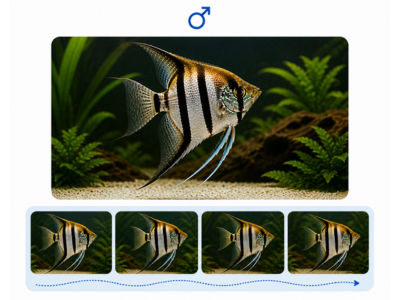
Overall Impression: Fast, sharp, energetic, and slightly aggressive in movement
Female Angelfish – Swimming Style
Female angelfish usually exhibit a calmer and more graceful swimming style, complementing their softer body structure and balanced behavior.
• Smooth and flowing movement
Swimming appears gentle and continuous
No sudden or jerky motions
• Slow and controlled pace
Maintain a steady speed while moving
Avoid rapid or aggressive motion
• Minimal sudden direction changes
Turns are gradual and smooth
Movement feels relaxed and stable
• Creates a peaceful tank atmosphere
Their presence adds calmness to the environment
Less disruptive compared to males
• Graceful and balanced motion
Swimming looks elegant and effortless
Matches their overall soft appearance
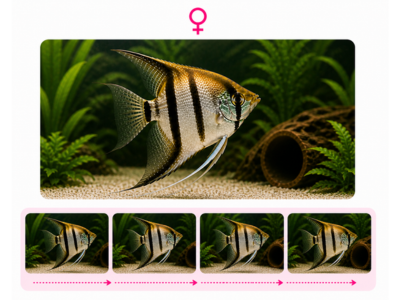
Overall Impression: Slow, smooth, controlled, and gracefully flowing
Observation Tip
When observing Pterophyllum scalare:
-
Males show faster, sharper, and more energetic swimming
-
Females display slower, smoother, and more graceful movement
-
Differences become clearer in calm tank conditions without stress
Swimming style, combined with behavior and body structure, can help you better understand and identify male and female angelfish over time.
Breeding Season Indicators
Breeding season is the most reliable time to identify gender differences in angelfish. In Pterophyllum scalare, physical and behavioral changes become much clearer when a pair is preparing to spawn. One of the most important signs is the appearance of the breeding tube (also called the genital papilla), along with noticeable shifts in behavior, body condition, and interaction between the pair.
Male Angelfish – Breeding Season Indicators
Male angelfish play a supportive but highly active role during breeding, focusing on fertilization and territory defense.
• Thin and pointed breeding tube
The breeding tube appears small, narrow, and slightly pointed
Usually visible just before spawning
• Follows the female closely
Stays near the female as she prepares to lay eggs
Mirrors her movement and guards her
• Fertilizes eggs after laying
Swims over the eggs immediately after the female lays them
Ensures successful fertilization
• Increased territorial behavior
Becomes more aggressive toward other fish
Actively protects the breeding site
• Heightened alertness and activity
Continuously patrols the area
Responds quickly to any disturbance
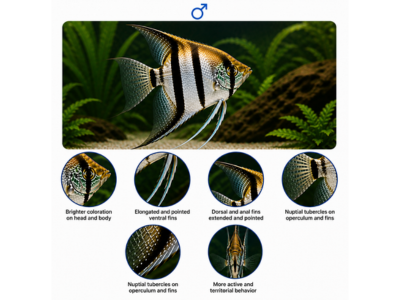
Overall Impression: Active, protective, and focused on fertilization and defense
Female Angelfish – Breeding Season Indicators
Female angelfish take the primary role in egg production and placement, with clear physical and behavioral signs during breeding.
• Thick and blunt ovipositor
Breeding tube appears larger, rounder, and blunt
Easily visible before egg-laying
• Fuller belly before spawning
Abdomen becomes noticeably round due to egg development
One of the earliest visible signs
• Lays eggs in neat rows
Deposits eggs in organized lines on flat surfaces
Common surfaces include leaves, glass, or slate
• Leads the spawning process
Selects and cleans the spawning site
Takes the lead in egg placement
• Active in egg care and protection
Fans the eggs and removes unfertilized ones
Stays close to guard and maintain them
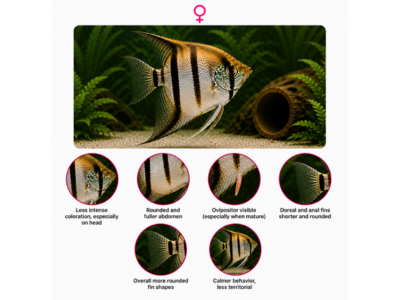
Overall Impression: Full-bodied, focused, and leading the spawning and egg care process
Observation Tip
When observing Pterophyllum scalare during breeding:
-
Males show a thin, pointed breeding tube and follow the female
-
Females display a thick, blunt ovipositor and lay eggs
-
The difference becomes very clear just before and during spawning
Breeding indicators are the most accurate way to confirm gender, especially when physical traits alone are not enough.
Quick Comparison
While all these differences help, the most reliable way to identify gender is during breeding.
- Breeding tube is 100% accurate
- Other traits can sometimes be confusing
- Best observed when fish are mature and ready to spawn
Faq
1. How do I know if my angelfish is male or female?
It’s not always easy, especially when they’re young. But as they grow, males look slimmer and taller, while females appear rounder with a fuller belly.
2. Why do my angelfish look the same?
I can’t tell the difference. That’s normal. Young angelfish look very similar. Differences become clearer only when they mature, especially during breeding time.
3. Which angelfish is bigger male or female?
Males often look bigger because they are taller and have longer fins. But females can look heavier and wider due to their body shape.
4. My angelfish has a fat belly. Is it female?
Most likely yes. Females usually have a rounder and fuller belly, especially when they are ready to lay eggs.
5. Why is my angelfish chasing other fish? Is it male? It could be.
Males are usually more territorial and aggressive, especially when claiming space in the tank.
6. One of my angelfish is very calm and slow. Is that a female?
Yes, females are generally calmer and swim more smoothly compared to males, who are more active.
7. How do I confirm 100% if my angelfish is male or female?
The easiest way is during breeding. Females lay eggs with a blunt tube, and males fertilize them with a pointed tube.
8. Do male angelfish have brighter colors?
Sometimes yes. Males can appear slightly more vibrant, especially when they are active or showing dominance.
9. Can I tell gender just by looking at fins?
You can get an idea. Males usually have longer, sharper fins, while females have shorter and softer-looking fins.
10. Why does one angelfish always eat first?
That’s usually a male. Males are more competitive during feeding and rush to food quickly.
11. Do female angelfish fight?
Not usually. Females are peaceful most of the time, but they can become aggressive when protecting eggs.
12. At what age can I identify angelfish gender?
You’ll start noticing differences when they become adults. Before that, it’s mostly guesswork.
Conclusion
Male and female angelfish may look similar at first, but with close observation, their differences in body shape, fins, behavior, and breeding roles become clear males appear more bold and dominant, while females show a softer, fuller, and more graceful presence, and with time and patience, identifying them becomes easier while also deepening your appreciation for their natural behavior.