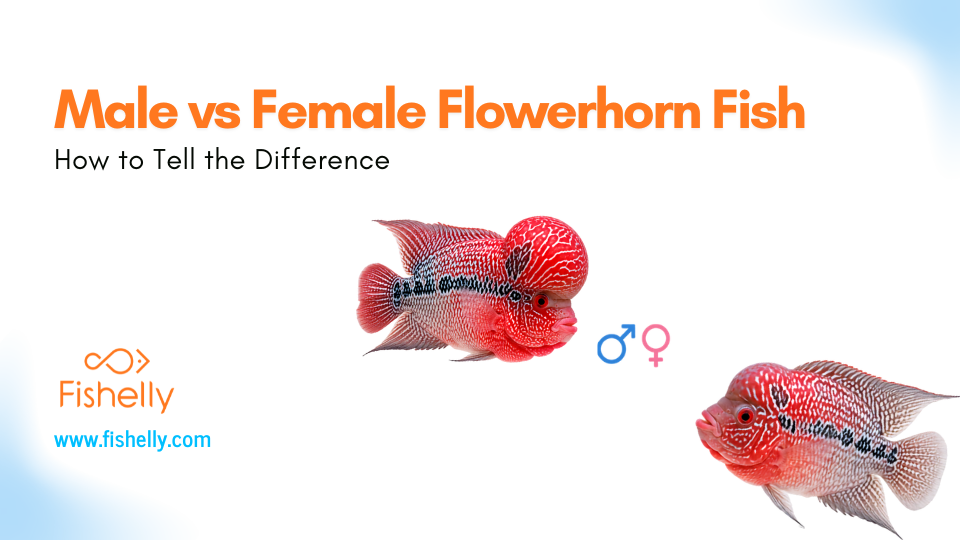
Male vs Female Flowerhorn Fish: How to Tell the Difference
FISH ARTICLES Fetching Data...
Fishelly Blog Image 1

Confused about your Flowerhorn's gender? Learn the most reliable ways to distinguish male and female Flowerhorn fish using their appearance, fins, behavior, and breeding traits.

  1. Body Shape
  2. Kok (Head Hump) & Overall Size
  3. Breeding Tube
  4. Tank Size For Flowerhorn Fish
  5. Color & Fin Appearance
  6. Behavior Differences
  7. Vent (Genital Opening)
  8. Forehead & Face Shape
  9. Mouth & Lips
  10. Dorsal & Anal Fin Tips
  11. Pelvic (Ventral) Fins
  12. Tail (Caudal Fin)
  13. Growth Rate
  14. Aggression Level
  15. Pair Bonding
  16. Faq
  17. Conclusion

Flowerhorn fish are popular aquarium cichlids known for their vibrant colors, unique personalities, and distinctive Kok (head hump). While male and female Flowerhorns may look similar when young, they develop noticeable physical and behavioral differences as they mature. By comparing features such as body shape, Kok, fins, breeding tube, coloration, and behavior, you can identify your Flowerhorn's gender more accurately.

Body Shape

Body shape is one of the most noticeable differences between male and female Flowerhorn fish. As they mature, their size, frame, and overall appearance become much easier to distinguish. While genetics and care can influence growth, body shape remains a reliable indicator when identifying the fish's gender.

Male Flowerhorn

Male Flowerhorns develop a larger, longer, and more muscular body as they mature. Their shoulders become broad and thick, giving them a strong, powerful appearance. Adult males usually have a more streamlined profile and appear dominant in the aquarium due to their larger size and robust frame.
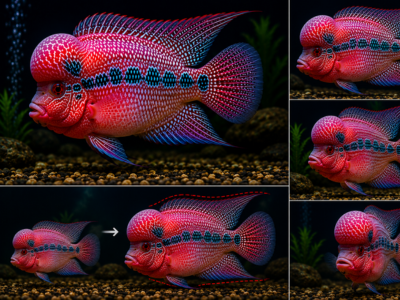
  • Larger overall body size

  • Long and elongated body shape

  • Thick, well-developed shoulders

  • Broad and muscular frame

  • Strong, athletic appearance

  • More dominant-looking posture

  • Generally grows larger than females

Female Flowerhorn

Female Flowerhorns have a shorter, rounder, and more compact body compared to males. Their abdomen becomes noticeably fuller as they mature, especially during breeding when they are carrying eggs. Females remain smaller in size and have a softer, less muscular appearance.
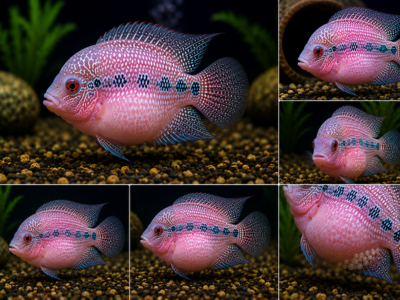
  • Shorter body length

  • Round and compact body shape

  • Fuller, wider abdomen

  • Smaller overall build

  • Less muscular frame

  • Softer body contours

  • Belly becomes more rounded during breeding

  • Generally remains smaller than males

Kok (Head Hump) & Overall Size

The Kok, also known as the nuchal hump, is the most iconic feature of a Flowerhorn fish and one of the easiest ways to distinguish males from females. Although genetics play the biggest role in Kok development, proper nutrition, water quality, and overall care can significantly influence its size and appearance. As Flowerhorns mature, the difference in both the Kok and overall body size becomes much more noticeable.

Male Flowerhorn

Male Flowerhorns typically develop a large, rounded, and fleshy Kok that becomes more prominent as they grow older. In high-quality bloodlines, the hump can become very large, giving the fish a bold and majestic appearance. Males also grow significantly larger than females, making them look more powerful and impressive in the aquarium.
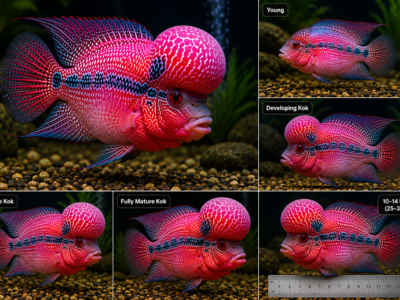
  • Large, well-developed Kok (nuchal hump)

  • Kok continues growing with age

  • Round, fleshy, and prominent forehead

  • More impressive head profile

  • Larger overall body size

  • Usually reaches 10 - 14 inches (25 - 35 cm)

  • Growth depends on genetics, diet, and water quality

  • More attractive display fish due to the massive Kok

Female Flowerhorn

Female Flowerhorns usually develop a very small Kok or no Kok at all. Their forehead remains flatter and less pronounced throughout their life. Even when fully mature, females are noticeably smaller than males and rarely develop the dramatic head hump seen in males.
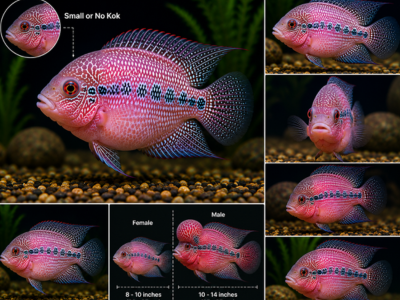
  • Small, underdeveloped, or absent Kok

  • Flatter forehead appearance

  • Less prominent head profile

  • Smaller overall body size

  • Usually reaches 8 - 10 inches (20 - 25 cm)

  • Compact and proportionate body structure

  • Kok growth is minimal, even with excellent care

  • Easier to identify when compared with mature males

Breeding Tube

The breeding tube, also known as the genital papilla, is one of the most accurate and reliable ways to identify the sex of a mature Flowerhorn fish. Unlike body shape or Kok size, which can vary due to genetics, the breeding tube provides a clear distinction between males and females during the breeding season.

Tip: The breeding tube is easiest to observe a few days before spawning or when the fish is ready to breed. It becomes more visible as the fish reaches reproductive maturity.

Male Flowerhorn

Male Flowerhorns develop a breeding tube that is thin, long, and pointed. It extends slightly from the vent when the fish is ready to spawn. During breeding, the male uses this tube to release sperm and fertilize the eggs after the female lays them.
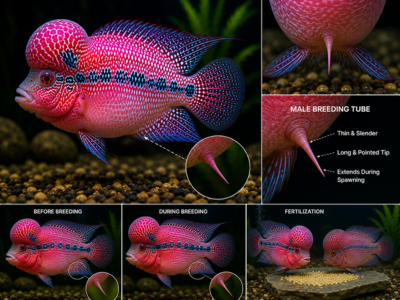
  • Thin and slender breeding tube

  • Long, pointed tip

  • Extends during spawning

  • Less noticeable when not breeding

  • Used to release sperm for fertilization

  • Usually appears narrower than the female's tube

  • Best observed just before or during breeding

Female Flowerhorn

Female Flowerhorns have a breeding tube that is short, thick, and rounded. It becomes clearly visible before egg laying and is larger than the male's breeding tube. This tube allows the female to deposit eggs onto a flat surface during spawning.
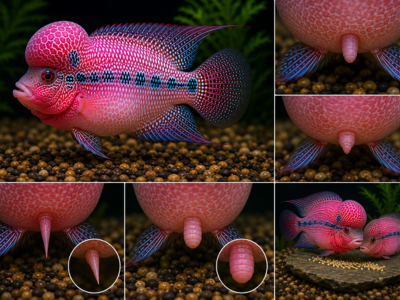
  • Short and thick breeding tube

  • Rounded or blunt tip

  • Clearly visible before egg laying

  • Wider than the male's breeding tube

  • Used to lay eggs during spawning

  • Becomes more prominent as spawning approaches

  • One of the most reliable indicators of a mature female

Color & Fin Appearance

Flowerhorn fish are well known for their bright colors, metallic pearling, and elegant fins. While both males and females can be beautiful, males generally display more vibrant coloration and longer, more dramatic fins. These differences become increasingly noticeable as the fish reaches maturity, although genetics, diet, lighting, and overall care also influence color intensity.

Male Flowerhorn

Male Flowerhorns usually exhibit brighter and more intense colors than females. Their reds, blues, greens, and metallic pearling are often richer and more vibrant, making them highly desirable for display aquariums. Males also develop longer dorsal and anal fins with pointed tips, giving them a graceful and majestic appearance.
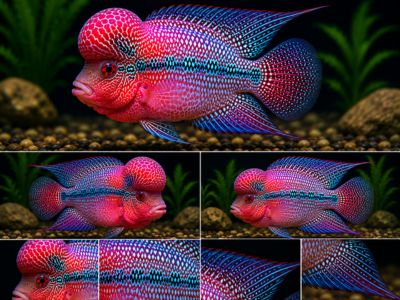
  • Brighter and more vibrant body colors

  • More intense red, blue, and green shades

  • Heavy metallic pearling across the body

  • Better color contrast and pattern definition

  • Longer dorsal fin

  • Longer anal fin

  • Pointed fin tips

  • Larger and more elegant fin extension

  • More attractive and eye - catching appearance

Female Flowerhorn

Female Flowerhorns can also display attractive colors and pearling, but they are generally less vibrant than males. Their coloration is often softer, and their fins remain shorter with rounded edges. Even high-quality females typically have a more subtle appearance compared to mature males.
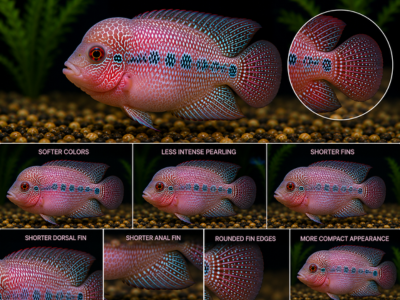
  • Slightly duller or softer body colors

  • Less intense red and blue coloration

  • Reduced metallic pearling

  • Shorter dorsal fin

  • Shorter anal fin

  • Rounded fin edges

  • Less dramatic fin extension

  • More compact and balanced appearance

  • Overall colors may fade slightly during certain breeding stages

Behavior Differences

Behavior is another helpful way to distinguish between male and female Flowerhorn fish, especially once they reach maturity. Although every fish has its own personality, males are generally more territorial and aggressive, while females tend to be calmer and less confrontational. These behavioral differences become even more noticeable during breeding, when both fish display their natural instincts.

Male Flowerhorn

Male Flowerhorns are naturally territorial, dominant, and highly protective of their space. They often establish a territory inside the aquarium and may become aggressive toward other fish that enter it. Males frequently display their strength by flaring their fins, displaying their colors, and attempting to intimidate rivals. This bold behavior is one of the reasons they are usually kept alone.
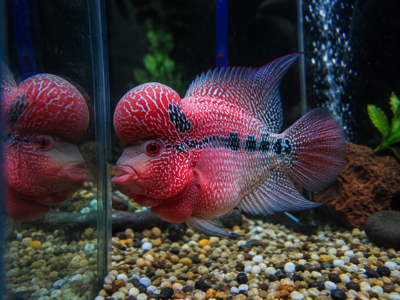
  • Highly territorial

  • Strong dominant personality

  • Frequently chases other fish

  • Defends its territory aggressively

  • Displays aggressive fin flaring

  • Performs glass surfing when excited or stressed

  • Often attacks reflections in the aquarium glass

  • More active and confident swimmer

  • Shows off bright colors when displaying dominance

  • Can become aggressive toward tank mates

Female Flowerhorn

Female Flowerhorns are generally more peaceful and less territorial than males. They are less likely to initiate aggression unless protecting their nesting area during breeding. When spawning, females become very attentive and protective of their eggs, often guarding them continuously until they hatch or are removed.
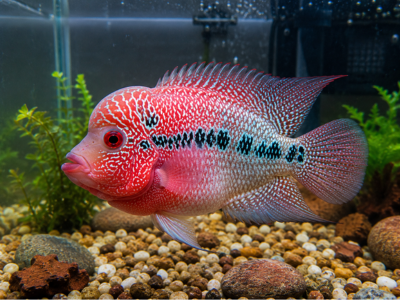
  • Generally calmer temperament

  • Less aggressive than males

  • Less territorial in normal conditions

  • More tolerant of surroundings

  • Protective only during breeding

  • Carefully guards and fans the eggs

  • May become aggressive only near the spawning site

  • Less likely to display dominance behaviors

  • More relaxed swimming pattern

  • Usually easier to manage than mature males

Vent (Genital Opening)

The vent, also known as the genital opening, is another reliable feature for determining the sex of a mature Flowerhorn fish. Although it requires close observation, the vent can provide an accurate indication of gender, especially when the fish is healthy and approaching breeding condition. This method is commonly used by experienced breeders because the differences become more noticeable in sexually mature fish. Tip: Observe the vent when the fish is calm or gently viewed from underneath. The differences are easiest to identify in adult Flowerhorns, particularly before spawning.

Male Flowerhorn

Male Flowerhorns have a small, narrow, and less noticeable vent. The opening remains compact and sits close to the anal fin. Even during the breeding season, the vent does not become as enlarged as it does in females.
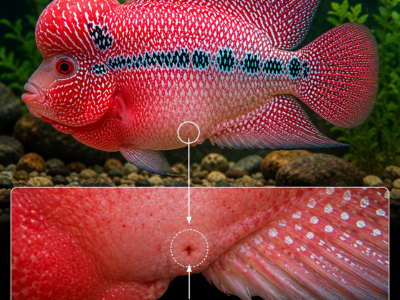
  • Small genital opening

  • Narrow, compact vent

  • Less noticeable appearance

  • Located close to the anal fin

  • Does not appear swollen under normal conditions

  • Remains relatively unchanged before spawning

  • Best identified in mature males

Female Flowerhorn

Female Flowerhorns have a larger, wider, and more visible vent. As the fish prepares to lay eggs, the vent becomes slightly swollen and more prominent, making it easier to distinguish from a male. This enlargement allows the female to release eggs during spawning.
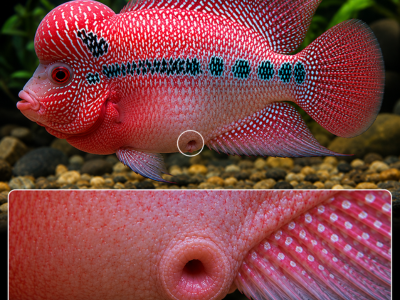
  • Larger genital opening

  • Wider and more rounded vent

  • More visible than the male's vent

  • Slightly swollen before spawning

  • Becomes increasingly prominent during breeding

  • Positioned close to the anal fin

  • Helps with egg laying during reproduction

Forehead & Face Shape

The forehead and facial structure of a Flowerhorn fish can also help identify its gender. As the fish matures, males typically develop a broader and more angular head, while females retain a smoother and rounder facial profile. Although this difference is not as reliable as the breeding tube or vent, it becomes a useful visual clue when combined with other physical characteristics.

Male Flowerhorn

Male Flowerhorns usually develop a broad forehead, angular face, and strong jawline as they mature. Their facial features appear bold and well-defined, giving them a powerful and masculine look. The large Kok (head hump) often enhances this appearance, making the head look even more prominent.
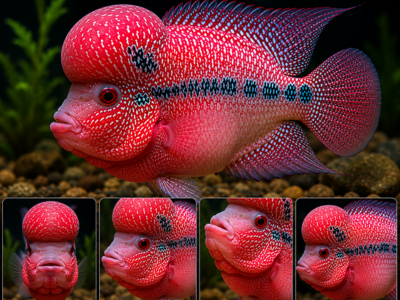
  • Wide and broad forehead

  • Angular, well-defined face

  • Strong, pronounced jawline

  • Bold and masculine appearance

  • Prominent head profile

  • Larger facial structure

  • Kok blends smoothly into the forehead

  • More intimidating and dominant look

  • Facial features become more pronounced with age

Female Flowerhorn

Female Flowerhorns have a smoother forehead, rounder face, and softer jawline. Their head appears smaller and more delicate compared to males. Since females usually have a small or absent Kok, their forehead remains flatter, giving them a gentle and balanced facial profile.
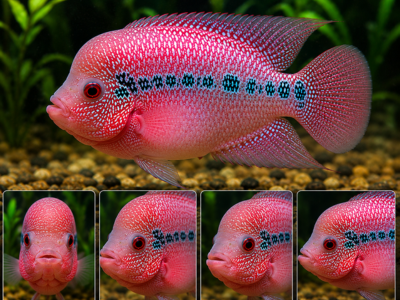
  • Smooth and flatter forehead

  • Rounded facial shape

  • Soft, less prominent jawline

  • Gentle and feminine appearance

  • Smaller head profile

  • Less angular facial features

  • Little or no Kok development

  • More compact facial structure

  • Softer overall expression

Mouth & Lips

The mouth and lip structure of a Flowerhorn fish can provide additional clues when identifying its gender. While the differences are more subtle than traits like the Kok or breeding tube, they become easier to notice as the fish reaches adulthood. Males generally have a larger, stronger-looking mouth, whereas females have a smaller and more delicate facial structure.

Male Flowerhorn

Male Flowerhorns typically develop a larger mouth with thicker lips and a stronger jaw. Their mouth appears wider and more powerful, complementing their broad head and muscular body. This gives the fish a bold and dominant facial appearance.
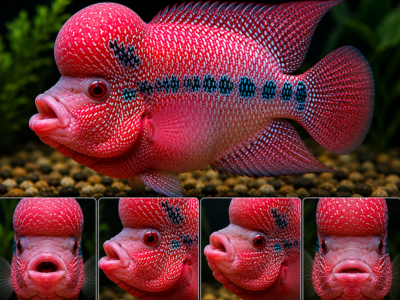
  • Larger and wider mouth

  • Thick, fleshy lips

  • Strong, well-developed jaw

  • Broad facial structure

  • More powerful bite appearance

  • Mouth appears proportional to the large head

  • Masculine and dominant facial expression

  • Becomes more noticeable with maturity

Female Flowerhorn

Female Flowerhorns have a smaller mouth with finer lips and a softer jawline. Their facial features appear more delicate and proportionate to their compact body size. Compared to males, the mouth looks less pronounced and contributes to their gentler overall appearance.
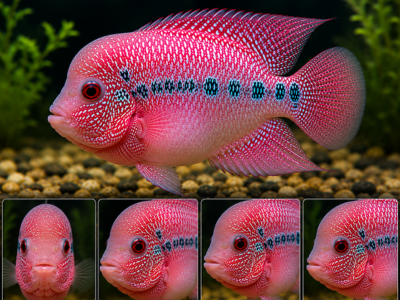
  • Smaller, compact mouth

  • Thin and fine lips

  • Soft, delicate jawline

  • Narrower facial structure

  • Less prominent mouth profile

  • Balanced with the smaller head size

  • Gentle and feminine appearance

  • Subtle facial features compared to males

Dorsal & Anal Fin Tips

The dorsal (top) fin and anal (bottom) fin are useful features for distinguishing male and female Flowerhorn fish. As the fish matures, these fins develop differently in each gender. Males usually grow longer, more pointed fins with elegant extensions, while females retain shorter fins with rounded edges. Although genetics can influence fin shape, this characteristic becomes more noticeable in healthy, mature Flowerhorns.

Male Flowerhorn

Male Flowerhorns develop long, flowing dorsal and anal fins that extend gracefully toward or even beyond the base of the tail. The fin tips are usually sharp and pointed, giving the fish a more majestic and dramatic appearance. These longer fins enhance the male's overall display and make it look larger and more dominant in the aquarium.
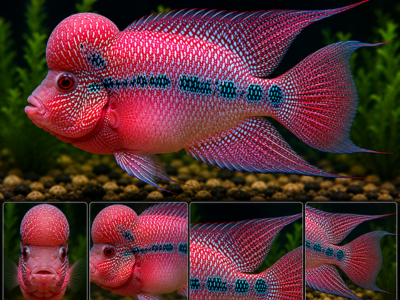
  • Long dorsal fin with noticeable extension

  • Long anal fin reaching toward the tail

  • Sharp, pointed fin tips

  • Fins may extend beyond the tail base

  • Elegant and flowing fin shape

  • Larger overall fin surface

  • Creates a bold and dramatic appearance

  • Gives the fish a more majestic look

  • Enhances the male's dominant display

  • Fin extensions become more pronounced with age

Female Flowerhorn

Female Flowerhorns generally have shorter dorsal and anal fins with rounded tips. Their fins remain compact and proportional to their smaller body size. Unlike males, the fins rarely extend toward the tail, giving females a softer and more balanced appearance.
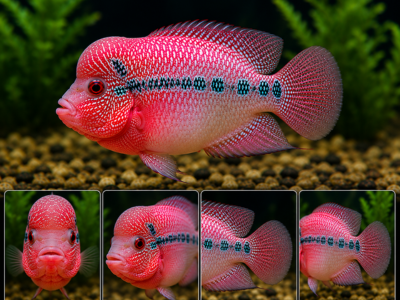
  • Shorter dorsal fin

  • Shorter anal fin

  • Rounded or blunt fin tips

  • Minimal fin extension

  • Compact and proportionate fin shape

  • Less flowing appearance

  • Softer and more delicate look

  • Fins remain closer to the body

  • Smaller overall fin size

  • Balanced with the female's compact body

Pelvic (Ventral) Fins

The pelvic fins, also called the ventral fins, are the pair of fins located on the underside of a Flowerhorn fish, just below the pectoral fins. Although they are not the primary feature used for gender identification, their length and shape can provide another useful clue when comparing mature males and females. These differences become more noticeable as the fish grows and reaches adulthood.

Male Flowerhorn

Male Flowerhorns typically develop long, slender pelvic fins with pointed tips. These fins often extend farther toward the anal fin or tail, giving the fish a more graceful and elegant appearance. The longer pelvic fins complement the male's larger body, longer dorsal and anal fins, and overall majestic look.
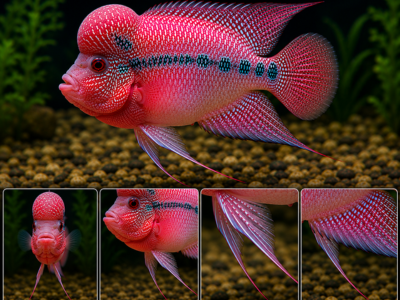
  • Long and well-developed pelvic fins

  • Thin, pointed fin tips

  • Extend farther toward the tail

  • More noticeable than in females

  • Flowing and symmetrical appearance

  • Enhance the fish's elegant profile

  • Complement the larger body and longer fins

  • Become more prominent as the fish matures

Female Flowerhorn

Female Flowerhorns usually have shorter and more compact pelvic fins. The fin tips are rounded rather than pointed, giving them a softer and less dramatic appearance. Their pelvic fins remain close to the body and are generally less noticeable than those of males.
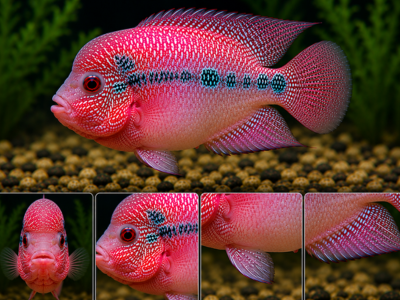
  • Short and compact pelvic fins

  • Rounded or blunt fin tips

  • Less extension toward the tail

  • Smaller overall fin size

  • Less noticeable appearance

  • Softer and more delicate fin shape

  • Balanced with the female's compact body

  • Remain relatively short even after maturity

Tail (Caudal Fin)

The pelvic fins, also known as the ventral fins, are the pair of fins located on the underside of the Flowerhorn fish, just behind the gill covers. Although they are not the primary feature used for sex identification, the size and shape of these fins can provide another useful visual clue when comparing mature males and females. These differences become more noticeable as the fish reaches adulthood.

Male Flowerhorn

Male Flowerhorns usually develop longer pelvic fins with sharp, pointed tips. These fins often extend farther toward the anal fin or even the tail, giving the fish a more elegant and streamlined appearance. The longer pelvic fins complement the male's larger body, longer dorsal and anal fins, and overall majestic look.
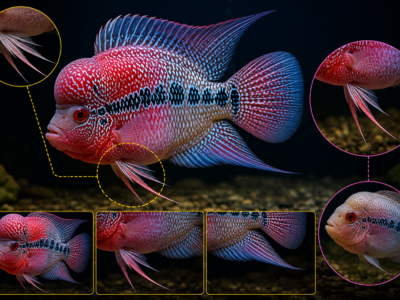
  • Long, well-developed pelvic fins

  • Sharp and pointed fin tips

  • Extend farther toward the tail

  • More noticeable than in females

  • Symmetrical and flowing appearance

  • Enhance the fish's elegant profile

  • Match the longer dorsal and anal fins

  • Become more prominent with maturity

  • Contribute to a larger overall appearance

Female Flowerhorn

Female Flowerhorns have shorter pelvic fins that remain compact and closer to the body. The fin tips are generally rounded, making them appear softer and less dramatic than those of males. Their pelvic fins are proportionate to their smaller body size and are usually less noticeable.
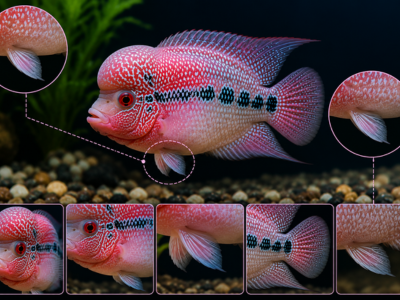
  • Short and compact pelvic fins

  • Rounded or blunt fin tips

  • Less extension toward the tail

  • Smaller overall fin size

  • Less noticeable appearance

  • Balanced with the female's body proportions

  • Softer and more delicate fin shape

  • Do not develop long flowing extensions

  • Remain relatively unchanged with age

Growth Rate

The growth rate of a Flowerhorn fish can provide valuable clues about its gender as it matures. Although genetics, diet, water quality, and tank conditions play a major role in growth, males generally grow faster, larger, and develop their signature features earlier than females. By comparing the growth patterns of similarly aged Flowerhorns, it is often possible to make a more accurate gender assessment.

Male Flowerhorn

Male Flowerhorns typically experience faster growth and begin developing their distinctive features at a younger age. Their body becomes larger and more muscular, while the Kok (head hump) often starts forming early and continues to grow with maturity. Because of their rapid development, males usually become visually impressive long before females of the same age.
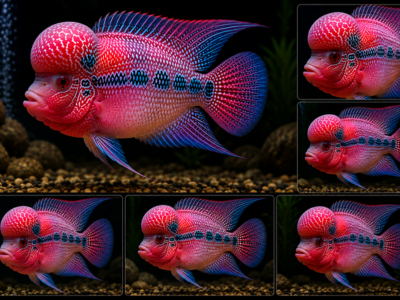
  • Faster overall growth rate

  • Gains body size more quickly

  • Develops the Kok earlier

  • Kok continues to enlarge with age

  • Reaches maximum size sooner

  • Larger and more muscular body

  • Becomes visually impressive at a younger age

  • Rapid fin and body development

  • Dominant appearance develops early

  • Usually grows larger than females under the same conditions

Female Flowerhorn

Female Flowerhorns generally have a slower and steadier growth rate. They remain smaller throughout their lives and rarely develop a prominent Kok. Instead of growing into a large, muscular fish, females maintain a compact body with softer features. Their slower growth is completely normal and does not indicate poor health.
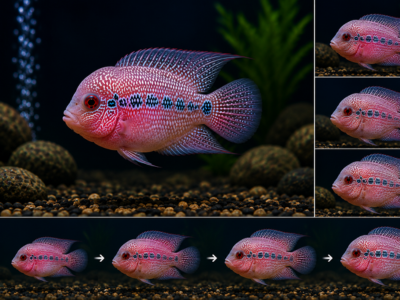
  • Slower overall growth rate

  • Remains smaller than males

  • Steady but moderate body development

  • Develops little or no Kok

  • Compact and rounded body shape

  • Smaller head and facial structure

  • Reaches adult size gradually

  • Softer and less muscular appearance

  • Growth remains proportionate to body size

  • Maintains a balanced, compact profile

Aggression Level

Aggression is one of the most noticeable behavioral differences between male and female Flowerhorn fish. While both sexes can become territorial under certain conditions, males are generally much more aggressive and dominant, especially as they reach maturity. Females are usually calmer but can become highly protective during the breeding period. Although temperament varies between individual fish, aggression level can provide another useful clue when identifying gender.

Male Flowerhorn

Male Flowerhorns are naturally highly territorial and dominant. They often claim a specific area of the aquarium and aggressively defend it from other fish. Mature males frequently display threatening behaviors such as flaring their fins, charging at tank mates, and attacking reflections in the glass. Because of their aggressive nature, adult males are usually kept alone unless they are being paired for breeding under close supervision.
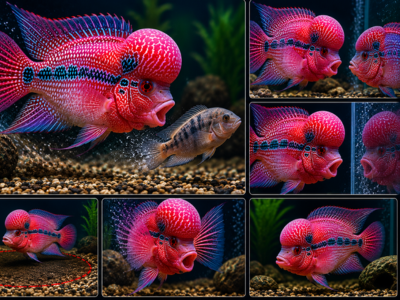
  • Extremely territorial

  • Highly aggressive toward other fish

  • Frequently chases tank mates

  • Displays dominance through fin flaring

  • Often fights with rival Flowerhorns

  • May attack reflections in the aquarium glass

  • Defends territory aggressively

  • Less tolerant of intruders

  • Bold and confident personality

  • Best housed alone in most aquariums

Female Flowerhorn

Female Flowerhorns are generally less aggressive and more peaceful than males. Under normal conditions, they are more tolerant of their surroundings and are less likely to initiate fights. However, during breeding, females become very protective of their eggs and nesting area, showing temporary aggression to keep potential threats away.
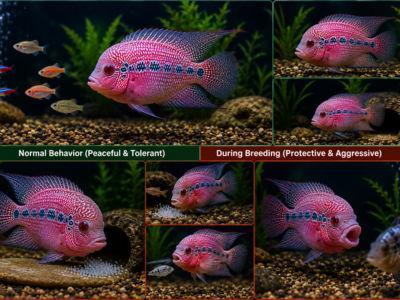
  • Less aggressive than males

  • More peaceful temperament

  • More tolerant of nearby fish

  • Rarely initiates unnecessary fights

  • Less territorial under normal conditions

  • Becomes protective during breeding

  • Aggressive mainly while guarding eggs

  • Calmer and more relaxed behavior

  • Easier to manage in controlled breeding setups

  • Returns to normal temperament after breeding

Pair Bonding

Pair bonding and courtship behavior provide valuable insights into the gender of mature Flowerhorn fish. During the breeding season, males and females display distinct roles that help prepare for successful spawning. Males typically take the lead in attracting and courting the female, while females focus on selecting a suitable spawning site, laying eggs, and protecting them afterward. These behaviors are most noticeable when a compatible breeding pair is introduced into a suitable aquarium environment.

Male Flowerhorn

During breeding, male Flowerhorns become more active and display a variety of courtship behaviors to attract the female. They often intensify their colors, flare their fins, and swim around the female to encourage spawning. The male also protects the breeding territory and fertilizes the eggs immediately after they are laid.
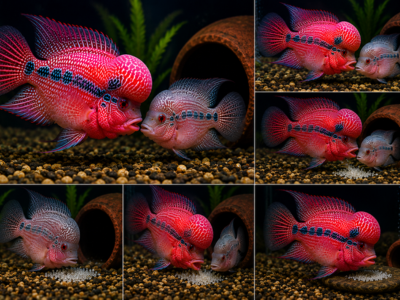
  • Initiates courtship behavior

  • Actively courts the female

  • Flares fins to appear larger and more attractive

  • Displays brighter, more intense colors

  • Circles and follows the female

  • Leads the female toward the spawning site

  • Defends the breeding territory

  • Encourages spawning through body displays

  • Fertilizes the eggs after they are laid

  • Continues guarding the breeding area

Female Flowerhorn

Female Flowerhorns play the primary role in selecting the spawning location and laying the eggs. Before spawning, they carefully inspect and clean a flat surface such as a rock, tile, or aquarium glass. After laying the eggs, females usually become highly protective, guarding and fanning the eggs to improve oxygen circulation and keep them clean until they hatch.
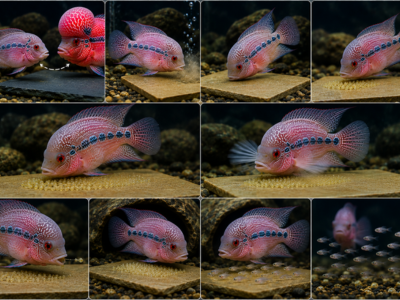
  • Accepts or rejects the male's courtship

  • Selects a suitable spawning site

  • Cleans the spawning surface before laying eggs

  • Focuses on egg laying

  • Lays eggs in neat rows

  • Guards the eggs after spawning

  • Fans the eggs with her fins to improve oxygen flow

  • Removes unhealthy or unfertilized eggs

  • Becomes protective of the nesting area

  • Continues caring for the eggs until they hatch

Faqs

1. How can I tell if my Flowerhorn fish is male or female?

You can identify a Flowerhorn's gender by comparing multiple characteristics such as body shape, Kok (head hump), breeding tube, fins, coloration, behavior, and overall size. Mature fish are much easier to identify than juveniles.

2. Do male Flowerhorn fish always have a bigger Kok?

In most cases, yes. Male Flowerhorns usually develop a large, prominent Kok, while females have a small Kok or none at all. However, genetics and proper care also influence Kok growth.

3. Which Flowerhorn grows larger, male or female?

Male Flowerhorns generally grow larger, reaching around 10 - 14 inches, while females usually remain smaller at about 8 - 10 inches.

4. What is the most accurate way to identify a Flowerhorn's gender?

The breeding tube (genital papilla) is considered the most reliable method, especially during the breeding season. Males have a thin, pointed tube, while females have a short, thick, rounded tube.

5. Are male Flowerhorns more aggressive than females?

Yes. Male Flowerhorns are usually more territorial and aggressive, whereas females are generally calmer except when protecting eggs during breeding.

6. Can female Flowerhorns have a Kok?

Yes, some female Flowerhorns can develop a small Kok due to genetics, but it is usually much smaller than that of a mature male.

7. At what age can you determine the gender of a Flowerhorn?

Gender differences become more noticeable once the fish reaches sexual maturity, usually around 6 - 12 months of age, depending on genetics and growth.

8. Do male and female Flowerhorns have different fin shapes?

Yes. Males typically have longer, pointed dorsal, anal, and pelvic fins, while females usually have shorter fins with rounded tips.

9. Can Flowerhorn fish live together as a pair?

Yes, but only under careful supervision. Flowerhorns are highly territorial, so breeding pairs should be introduced gradually and often separated with a divider until they are compatible.

10. Is body color a reliable way to identify a Flowerhorn's gender?

Color alone is not reliable. Males usually have brighter colors and heavier pearling, but some females can also display vibrant coloration depending on their genetics and care.

Conclusion

Identifying a male or female Flowerhorn is easiest when you observe multiple characteristics rather than relying on a single trait. Differences in body shape, Kok size, fin structure, breeding features, coloration, growth, and behavior all help determine the fish's gender. With careful observation, you can confidently identify your Flowerhorn and provide the right care or select a suitable breeding pair.

Related Blogs

Dive into Bliss: Why Homes Around the World Choose the Charm of Keeping Fish
FISH ARTICLES Fetching Data...

Dive into Bliss: Why Homes Around the World Choose the Charm of Keeping Fish

In the serene corners of homes around the world, beneath the gentle glow of aquarium lights, a silent underwater symphony unfolds—the allure of keeping fish as companions. 

Beyond mere decorative elements, fish tanks have become windows into aquatic realms, inviting us to ponder why people choose to welcome these aquatic wonders into their homes. From the vibrant hues of tropical fish to the tranquil dance of freshwater species, the presence of fish transcends mere aesthetics. 

Join fishelly as we delve into the depths of this aquatic fascination and explore the myriad reasons why people choose to keep fish at the heart of their homes. It's not just about tanks and water; it's about creating miniature oceans that captivate, soothe, and become integral parts of our daily lives. 🐠✨

People keep fish at home for various reasons, including:

  1. Aesthetic Appeal:
    • Fish tanks and aquariums enhance the visual appeal of homes with their vibrant colours, graceful movements, and unique patterns.
  2. Stress Reduction:
    • Watching fish swim has a calming effect, reducing stress and promoting relaxation. The rhythmic movements and tranquil environment contribute to a soothing atmosphere.
  3. Educational Value:
    • Keeping fish provides an educational experience, especially for children, fostering an understanding of aquatic life, ecosystems, and the responsibility of caring for living beings.
  4. Low Maintenance Pets:
    • Fish are generally considered low-maintenance pets compared to traditional animals. They don't require walks, and their care involves regular feeding and tank maintenance.
  5. Suitable for Limited Space:
    • Fish tanks are space-efficient, making them suitable for homes with limited space. They offer a slice of nature without the need for expansive areas.
  6. Therapeutic Benefits:
    • Aquariums have therapeutic benefits, helping individuals with conditions like anxiety or insomnia. The calming effect of watching fish can contribute to overall well-being.
  7. Hobby and Recreation:
    • Keeping fish is a hobby for many enthusiasts. It involves creating and maintaining aquatic environments, selecting fish species, and participating in a community of fellow hobbyists.
  8. Social Connection:
    • Fish-keeping communities provide a social connection for enthusiasts who share a passion for aquatic life. Exchanging knowledge, experiences, and tips becomes part of the hobby.
  9. Variety of Species:
    • The vast variety of fish species available in the pet trade allows individuals to choose fish that match their preferences, whether it's the striking colours of tropical fish or the elegance of freshwater species.
  10. Decorative Element: * Aquariums serve as decorative elements in interior design. They can be customised with plants, rocks, and other ornaments, adding a personalised touch to home decor.

In summary, people keep fish at home for their aesthetic beauty, therapeutic effects, educational value, and the joy of maintaining a unique and engaging hobby. The presence of fish in a home contributes to a positive and visually appealing atmosphere. Read more

Navigating the Seas of Fish Purpose and Passion
FISH ARTICLES Fetching Data...

Navigating the Seas of Fish Purpose and Passion

In the vast underwater tapestry that intertwines our culinary preferences and home aesthetics, a fascinating distinction emerges—the difference between fish destined for the dining table and those gracing the serene confines of aquariums. 

Beyond the shimmering scales and graceful fins lies a dichotomy of purpose, where one swims into the realm of sustenance, and the other dances within the curated beauty of an aquatic microcosm. 

Here I’ll explain a journey to unravel the nuances that set these aquatic denizens apart, exploring the seas of intent, habitat, and care that define the divergent paths of fish destined for our plates and those chosen as cherished companions in the immersive world of aquariums. 🌊🐟✨

The main difference between fish for non-vegetarian consumption and those kept in aquariums lies in their intended purpose, characteristics, and the environment they are raised in.

  1. Intended Purpose:

    • Non-vegetarian consumption: Fish raised for non-vegetarian consumption are bred and harvested as a food source. They are often selected based on factors like taste, size, and nutritional value.

    • Aquarium fish: Fish kept in aquariums are primarily chosen for their aesthetic appeal, behaviour, and compatibility with a confined aquatic environment. They are not intended for consumption.

  2. Species Selection:

    • Non-vegetarian consumption: For food, commonly consumed fish species include varieties like salmon, tuna, cod, and tilapia, chosen for their taste and nutritional content.

    • Aquarium fish: Aquarium enthusiasts often select a diverse range of fish species, including colourful tropical fish (like tetras, guppies, and angelfish) and peaceful freshwater species, based on their visual appeal and compatibility in a confined space.

  3. Habitat and Environment:

    • Non-vegetarian consumption: Fish for consumption are typically raised in aquaculture farms or harvested from natural water bodies. Their living conditions are optimised for growth and maximum yield.

    • Aquarium fish: These fish are kept in controlled environments, such as home aquariums or public aquarium facilities. The conditions are designed to mimic their natural habitat, providing a safe and visually pleasing space.

  4. Care and Management:

    • Non-vegetarian consumption: Fish raised for consumption are often managed with a focus on efficient growth, health, and nutritional quality. Their living conditions are optimised for commercial production.

    • Aquarium fish: Care for aquarium fish emphasises creating a balanced ecosystem within the aquarium, maintaining water quality, providing proper nutrition, and ensuring compatibility among different species.

  5. Lifespan and Size:

  • Non-vegetarian consumption: Fish raised for consumption may be harvested at various stages of their life cycle, depending on the desired size and market demand.

  • Aquarium fish: Aquarium enthusiasts often aim to provide a comfortable and suitable environment for their fish to thrive, with an emphasis on allowing them to live out their natural lifespan.

In essence, the key distinction lies in the purpose for which the fish are raised—whether for human consumption or as captivating aquatic companions in the confined beauty of an aquarium.

Conclusion:

As we navigate the currents that separate fish destined for culinary delights from their counterparts adorning aquariums, we find a profound tale of purpose and passion. 

In the kitchens of gastronomy, fish play a role measured by taste, nutrition, and sustenance, while in the aquascaped realms of our homes, they become living canvases, captivating us with their colours and behaviours.

Yet, beneath the surface distinctions, a common thread emerges—their intrinsic value in connecting us with the vast, mysterious world beneath the waves. 

Whether swimming in oceans of culinary tradition or gracefully gliding through the curated waters of aquariums, fish embody the beauty, diversity, and wonder of aquatic life.

So, whether you appreciate the delicate flavours of seafood on your plate or find solace in the serene dance of aquarium fish, let us recognize and celebrate the importance of these remarkable creatures in both realms. 

In doing so, we embark on a shared journey, appreciating the unique roles they play in our lives and acknowledging the interconnectedness that binds us to the depths of the oceans and the beauty they bring into our homes. 🌐🐠✨ Read more

Unveiling Matsya Avatar: Lord Vishnu's Epic Dive into Cosmic Preservation
FISH ARTICLES Fetching Data...

Unveiling Matsya Avatar: Lord Vishnu's Epic Dive into Cosmic Preservation

In the enchanted realms of Hindu mythology, the story of Matsya Avatar unfolds as an epic dive into cosmic preservation. Imagine Lord Vishnu taking the form of a fish, steering through celestial waters to secure the essence of life and knowledge as a great deluge approaches.

Dive into Divinity

As cosmic cycles churn, Lord Vishnu's cosmic alarm rings with the impending Pralaya. The celestial advice from Lord Brahma prompts Vishnu to become Matsya, a fish navigating the cosmic sea, with a mission to safeguard existence.

A Boat of Hope

The virtuous King Manu is entrusted with building an ark – not just a boat but a symbol of hope. Seeds, animals, scriptures, and sages find refuge as Matsya guides this vessel through the storm of dissolution.

Serpentine Ties

To anchor the boat to Matsya's divine force, King Manu uses Vasuki, a celestial serpent. It symbolizes the interconnectedness of life, showcasing a collaborative effort for preservation.

Navigating Chaos

As the cosmic tempest engulfs, Matsya ensures a safe passage, turning the journey through the deluge into a metaphor for life's tumultuous waters, guided by duty and righteousness.

Cosmic Symphony

Beyond the tale lies profound symbolism – the fish representing the cyclical nature of existence and the boat, a fragile vessel sailing through cosmic uncertainties, echoing the transient nature of life.

Conclusion

In Matsya Avatar's dive into cosmic preservation, Hindu mythology unveils a cosmic symphony. It's not just a myth but a captivating narrative resonating with the essence of existence, where the divine fish and the ark become metaphors for life's journey through the cosmic ocean. Read more

The Zen of Fishkeeping: How Aquariums Promote Relaxation and Stress Relief
FISH ARTICLES Fetching Data...

The Zen of Fishkeeping: How Aquariums Promote Relaxation and Stress Relief

The Art of Aquarium Design

An alluring aquarium starts with the creative vision and mindful arrangement of its elements. To create a serene aquatic sanctuary where fish gracefully navigate through a captivating underwater environment, consider these essential aspects of aquarium design:

  • Aquascape: Aquascaping is the harmonious arrangement of aquatic plants, driftwood, and rocks. It’s crucial to select plants that not only complement each other but also create a sense of balance and depth. Experiment with various textures and shapes to achieve a visually appealing composition.

  • Color Palette: Use a harmonious color scheme to create a soothing and cohesive visual experience. Consider the colors of your aquatic plants, substrate, hardscape, and even the fish you choose. Strive for a balance of colors that are lively, yet calming.

  • Lighting: Adequate lighting not only enhances the beauty of your aquarium but is also crucial for the health of your fish and plants. Opt for natural, warm color tones that mimic sunlight and bring out the vibrancy of the colors in your aquatic environment.

  • Filtration and Water Flow: A well-designed aquarium includes an efficient filtration system and proper water flow. Aim for a gentle water movement that keeps the water crystal clear without causing undue stress for the inhabitants. Also, ensure the filtration system remains discreetly hidden to maintain the aesthetic appeal of your aquarium.

  • Scale and Proportion: Maintain a sense of harmony by considering the size and proportion of your aquarium’s elements. Choose fish breeds, plants, and hardscape materials that suit the dimensions of your tank and complement each other in size and shape.

Crafting the perfect aquatic environment allows you to connect with nature at a more intimate level. With every beautifully-designed aquarium, you create a thriving underwater paradise that fosters relaxation and positively impacts your well-being. Harness this serene energy and transform your everyday living space into a haven of tranquility.

neon tetras planted tank

Choosing Your Fish Wisely

When it comes to the exquisite art of fishkeeping, selecting the right fish is crucial in fostering a harmonious, thriving aquatic environment. Striking the perfect balance between variety, compatibility, and your personal preferences is vital. Here’s what to keep in mind when choosing your fish:

  • Compatibility: Observe species’ temperaments and ensure they can coexist peacefully. Avoid combining aggressive, territorial fish with docile, peaceful species – as this could lead to stress or, worse, fatalities. Research each species to help you create a harmonious community tank.

  • Size and Growth: Factor in the adult size of each fish when selecting them, as many species grow significantly after purchase. Be cautious of overstocking your aquarium, which may cause stress and health issues.

  • Diet and Feeding: Consider the dietary requirements of your chosen fish species. Some may have specific needs or feeding patterns that could dictate your tank’s dynamics. Ensuring that your fish receive proper nutrition contributes to their overall health, happiness, and vibrancy.

  • Temperature and Water Parameters: Fish species have different preferences for water temperature, pH, and hardness levels. Select fish with similar water conditions to ensure a thriving habitat.

  • Fish Activity and Behavior: When designing your vibrant aquatic environment, note the swimming levels of each species. Opt for a mix of fish that inhabit different sections of the tank – top, middle, and bottom – achieving balance and activity throughout the aquarium.

  • Aesthetic Appeal: Last, but not least, select fish that appeal to your personal taste. Choose species with captivating colors, patterns, and shapes that inspire you and enhance your aquarium’s visual appeal.

Your carefully chosen fish serve as living jewels in the aquatic kingdom you create. By taking the time to select the right species, you’re investing in your fish’s well-being and your own. Such a harmonious and thriving aquatic environment infuses your daily life with tranquility, helping you connect with nature and improve your overall mental health.

make fish tank interesting

The Meditative Maintenance Routine

Caring for your aquarium is an opportunity to engage in mindfulness and reflection while nurturing your fish and nurturing yourself. Transcend the typical notions of household chores by transforming your maintenance routine into a meditative practice. Here’s how to immerse yourself in this calming ritual:

  • Observation: Start by quietly observing your fish’s behavior, taking in their graceful movements and interactions. This simple act of connecting with your aquatic pets encourages relaxation and fosters an appreciation of their beauty.

  • Water Quality: Monitoring and maintaining water parameters, such as temperature, pH, and ammonia levels, contributes to the well-being of your fish. Embrace this process as an act of care, a way to provide a healthy environment for your underwater friends.

  • Feeding: Nourishing your fish is a tranquil and often captivating experience. Observe how they react to food and relish in the connection you build with them during feeding times. This interaction strengthens the bond between you and your aquatic companions.

  • Cleaning: Approach the tasks of cleaning algae, replacing filter media, and vacuuming the substrate with mindfulness. Focus on each step, gently moving through the aquarium, and reap the benefits of this tactile and grounding activity.

  • Aquascaping: Tend to your aquatic plants, trim overgrown foliage, and rearrange hardscape materials with creativity and patience. Engaging in aquascaping provides an opportunity for artistic expression and allows you to be present in the moment as you shape your underwater garden.

Embrace your maintenance routine as a therapeutic ritual, and you’ll discover how fishkeeping promotes not just the health of your aquatic pets, but also your mental well-being. Dedicate yourself to this practice, and you’ll find an unmatched sense of calm and tranquility resting beneath the surface of the water.

goldfish tank rocks

Aquariums as Stress Relievers

Aquariums provide a soothing escape from the hustle and bustle of our daily lives, as their majesty captivates and calms even the most restless of minds. Here’s how your self-created underwater paradise can bring tranquility and balance to your life:

  • Visual Relaxation: Watching fish gracefully glide through water and observing the gentle sway of aquatic plants creates a mesmerizing scene. This peaceful panorama provides an unparalleled opportunity to escape life’s stresses and focus on the beauty and serenity of your aquarium.

  • Natural Connection: Spending time with your aquarium nurtures your connection to nature, bringing solace and tranquility to your home. This natural bond has been shown to significantly reduce stress, anxiety, and feelings of isolation.

  • Creativity: Designing and maintaining an aquarium allows for personal expression and artistic creativity. Engaging with your aquatic habitat unlocks a sense of accomplishment and satisfaction, fostering emotional resilience and inner peace.

  • Mood Enhancement: Studies have shown that merely observing an aquarium can lower blood pressure and heart rate, drawing you into a meditative state. Experience reduced anxiety and stress levels as you allow the soothing energy of your aquarium to calm and center you.

  • Habitat for Healing: Aquariums have long been known to promote relaxation and healing. Many hospitals, residential care facilities, and therapist offices incorporate well-designed aquariums to provide calming effects for patients and visitors alike.

Delving into the world of fish keeping not only provides you with immense satisfaction from nurturing and preserving harmony in your underwater oasis, but it also serves as a powerful stress reliever.

Let your aquarium bring serenity, balance, and wellness to your life, and experience the profound relationship between aquariums and emotional well-being.

beautiful planted aquarium

The Healing Power of Water

Water has been revered for its healing properties since ancient times, its calming presence transcending cultures and traditions. Fish keeping allows you to harness these therapeutic qualities within your own space, amplifying the benefits of your aquatic haven. Here’s how water adds to the restorative impact of your aquarium:

  • Soothing Sounds: The gentle bubbling of water from a filter or the soft flowing current in the tank creates a calming ambience. These tranquil sounds are proven to promote relaxation, helping to alleviate stress and anxiety.

  • Meditative Movement: Observing the smooth, fluid movements of fish swimming amid their watery environment effortlessly draws your focus, acting like a natural form of meditation. This engagement in the present moment helps to quiet a racing mind and bring a sense of peace.

  • Therapeutic Touch: Many people find solace in physically interacting with water, whether through hand feeding their fish or tending to the tank during cleaning and maintenance. This tangible connection enhances the calming experience.

  • Symbolism of Water: Water represents emotions, purity, and renewal in various cultures and spiritual practices. By nurturing your aquarium, you can channel and embrace these positive associations, forging a deeper connection with both your aquatic habitat and your inner self.

  • Aqua Therapy: Numerous studies have demonstrated the benefits of water-based therapy, known as aqua therapy or hydrotherapy, in treating mental health conditions. Although not a substitute for professional treatment, aquariums can serve as a supplemental source of serenity in your daily life.

By incorporating the healing power of water into your fishkeeping journey, your immersive aquatic environment becomes more than just a visually stunning showpiece; it transforms into a source of solace, tranquility, and emotional well-being.

Admire the sway of aquatic plants and immerse yourself in the hypnotic dance of fish, as you harness the ancient, restorative energy of water.

natural planted aquarium

Connecting with Nature Indoors

Creating and nurturing your aquarium is an opportunity to form a unique, personal connection with nature within your own living space. This intimate experience with the natural world has a profound impact on mental health and emotional healing. Explore the diverse ways fishkeeping establishes this bond with nature indoors:

  • Biophilic Design: Incorporating elements of the natural world into interior spaces, such as plants, water, and natural light, is known as biophilic design. Aquariums exemplify this concept, bringing life, color, and serenity into your home.

  • Ecosystem Creation: Designing an aquarium is a chance to emulate a natural ecosystem, carefully balancing flora and fauna while respecting their unique needs and habitats. This process nurtures a deeper understanding and greater appreciation for the intricacies of aquatic life.

  • Mindful Observation: Spending time observing your aquarium residents not only lowers stress and anxiety but also fosters a closer connection to the natural world. Witnessing their innate behaviors, intricate interactions, and delicate movements brings you closer to the aquatic realm.

  • Environmental Stewardship: Aquarium hobbyists develop a heightened sense of responsibility for the environment as they care for their fish and plants. This conscientious attitude often spills over into daily life, encouraging mindful choices and sustainable living.

  • Well-Being and Stress Reduction: Experiencing nature indoors positively impacts psychological well-being. Several studies have reinforced the correlation between spending time in natural settings and reduced stress levels. Aquariums bring these benefits to your doorstep.

Inviting nature into your living space by investing time and energy into your aquarium cultivates a profound connection to the environment. Embrace this opportunity to connect with the natural world without stepping outside, and reap the mental health rewards that come with this intimate relationship.

Watch in wonder as your indoor aquatic sanctuary breathes vitality and serenity into your life.

planted aquarium on stand

Aquariums and Meditation

Aquariums and meditation share a common thread of tranquility, mindfulness, and deep connection to the present moment. The combination of these practices heightens the emotional benefits of both, inspiring a sense of inner peace and balance. Delve into the link between aquariums and meditation, and how these practices intertwine:

  • Focused Attention: Both meditation and aquarium observation require dedicated focus and mindfulness. By concentrating on the underwater world before you, you become centered and grounded in the present moment, much like traditional meditation.

  • Flowing Movement: The graceful, rhythmic motion of fish swimming and aquatic plants swaying imitates the peaceful, flowing energy of meditation. This harmony and cadence effortlessly draw you into a calmer state of being.

  • Visual Anchor: Aquatic life offers a captivating focal point that can be used as a visual anchor during meditation, similar to the way a candle flame is often used. Allowing your gaze to rest on the mesmerizing beauty of your aquarium can guide you into deeper relaxation and focus.

  • Breathing and Relaxation: Watching the gentle underwater world inspires slow, steady breathing and a relaxed state of mind, corresponding to the principles of meditation. As your breath synchronizes with the movement of the water and its inhabitants, the experience becomes meditative.

  • Sensory Enrichment: Aquariums create a multi-sensory experience that complements and enhances the meditative journey. Softly bubbling water, the subtle sound of a filter, and the changing colors of aquatic life and plants contribute to an immersive, calming environment.

By integrating your aquarium into your meditation practice, you can cultivate a richer and more fulfilling experience that nourishes your soul. Immerse yourself in the serene, mesmerizing beauty of your aquatic haven, and embark on a profound journey toward inner peace and emotional well-being.

aquarium stones

Creating a Balanced Ecosystem

An essential aspect of experiencing the full benefits of fishkeeping is establishing a thriving, stable ecosystem within the confined space of your aquarium. By respecting the delicate interdependence of fish, plants, and their environment, you contribute to their well-being while fostering a calming atmosphere. Here’s how to create a balanced ecosystem in your home aquarium:

  • Water Quality: Maintain clear, clean water by diligently monitoring water parameters, including pH, ammonia, nitrite, and nitrate levels. Invest in a high-quality filter to remove waste, and perform regular water changes to maintain optimal conditions for your inhabitants.

  • Nutritional Balance: Provide wholesome, varied nutrition to your fish and ensure that no species are neglected due to competition. A well-fed, happy community of fish results in a dynamic, tranquil ecosystem.

  • Population Control: Overstocking can lead to stress, illness, and conflict among fish, negatively impacting the balance in the tank. Be mindful of each species’ adult size and ensure there is ample space for all to swim and hide comfortably.

  • Plant and Fish Harmony: Choose plants and fish species that complement each other, providing shelter, oxygen, and visual interest within the aquarium. An equilibrium between plants and fish is fundamental to achieving a balanced ecosystem.

  • Consistent Maintenance: Carefully observing your aquarium and addressing any changes or issues is essential to maintaining harmony. Detecting and addressing problems or imbalances early on helps to prevent more significant issues down the road.

By taking these critical factors into consideration and nurturing a balanced ecosystem in your aquarium, you contribute to the health and happiness of its inhabitants while cultivating a serene and calming environment for yourself. Commit to creating harmony within your aquatic world and experience the positive impact it has on your well-being.

aquarium in office building

Aquariums for Personal Growth

Embracing the world of fishkeeping not only provides a fascinating new hobby but also acts as a catalyst for personal growth and self-improvement. As you nurture your aquatic companions and carefully cultivate their environment, invaluable lessons arise that translate into broader aspects of life. Consider these transformative aspects of aquarium upkeep:

  • Patience: Establishing a healthy aquarium environment requires time and dedication. Fishkeeping teaches you not to rush the process; instead, you learn to appreciate the unhurried, steady development of your underwater world.

  • Responsibility: Caring for living creatures instills a profound sense of responsibility and accountability. This commitment shapes your character, enhancing your ability to handle diverse life situations with mindfulness and care.

  • Problem Solving: Troubleshooting and resolving issues that arise within the aquarium, such as water conditions or fish health concerns, cultivates problem-solving and critical thinking skills that are essential in many aspects of life.

  • Empathy and Compassion: Observing and attending to the needs of your aquatic inhabitants enhances empathy and compassion, promoting a deeper understanding of the interdependence between humans, animals, and our shared environment.

  • Mindfulness: Fishkeeping promotes a profound sense of mindfulness and connection to the present moment, helping to ease stress and anxiety. This heightened awareness of life’s beauty can ultimately create a more fulfilling existence.

  • Creativity and Self-Expression: Designing and nurturing your aquarium allows for artistic expression, encouraging you to explore your personal style and taste, enriching your personal experience and shaping your identity.

The art of fishkeeping stretches far beyond mere aesthetics; it serves as a conduit for personal growth and self-discovery. Welcome this transformative practice into your life, and watch as the tranquil waters of your aquarium create ripples of change, carrying you toward a more balanced, mindful, and compassionate existence.

zen balanced stones

Sharing the Zen Experience

As you immerse yourself in the enchanting realm of fishkeeping, you’ll naturally be inspired to share your passion and experiences with others. Sharing the Zen experience of aquariums nurtures a sense of community and offers a platform to embrace the positive energy that transcends from your aquatic masterpiece.

Explore these ways to share the tranquility of fishkeeping with friends, family, and fellow enthusiasts:

  • Social Media: Capture the beauty and serenity of your aquarium with photos, videos, or livestreams, sharing your aquatic journey and connecting with like-minded individuals across global communities.

  • Aquarium Clubs and Groups: Join local or online aquarium clubs and forums, where you can exchange ideas, seek advice, and foster relationships with fellow enthusiasts, bridging the gap between your passion for fishkeeping and social fulfillment.

  • Educating Others: As you gain knowledge and experience in fishkeeping, share your insights and expertise with newcomers to the hobby. Your guidance is invaluable, helping to spark a passion for aquariums in others.

  • Hosting Events: Invite friends, family, or fellow hobbyists to your home for a relaxing evening, where they can admire your aquatic creation and engage in meaningful conversations about the experience.

  • Gifts and Encouragement: Inspire others to explore the world of aquariums by gifting a starter kit or offering your support while they embark on their fishkeeping journey.

Sharing the Zen experience of your aquarium illuminates the lives of others, offering the opportunity to improve mental and emotional well-being on a broader scale.

By opening your heart and your captivating underwater oasis to others, you foster community, friendship, and passion, enriching the lives of those around you and heightening the power of the tranquil energy that flows from your aquatic masterpiece.

Conclusion

Embrace the captivating world of fishkeeping and experience the transformative effects on your well-being. Dive into this mesmerizing journey, and let the tranquil waves of your aquarium radiate serenity in every aspect of your life. We’d love to hear your thoughts – please leave a comment below! Read more

101 Fin-tastic Facts: Unlock the Secrets of the Deep
FISH ARTICLES Fetching Data...

101 Fin-tastic Facts: Unlock the Secrets of the Deep

When you get more information on one single page then why to move for others. Here are the interesting facts about fish lovers. We embark on an exhilarating expedition to uncover the hidden treasures and untold wonders lurking beneath the waves.

In this immersive exploration, we unveil the secrets of the deep blue, shedding light on its mesmerising inhabitants, ancient legends, and awe-inspiring phenomena. From the majestic creatures that roam its depths to the intriguing tales of lost civilizations, our voyage promises to be nothing short of fin-tastic.

Prepare to be captivated as we delve into 101 captivating facts, each revealing a new facet of the ocean's profound beauty and unfathomable mysteries. Whether you're a seasoned marine enthusiast or a curious soul embarking on your maiden voyage, there's something here to intrigue and inspire every seeker of knowledge.

So, fasten your seatbelts—or should we say, secure your dive gear—as we plunge headfirst into the depths of discovery. Let's unlock the secrets of the deep together and embark on a journey that promises to be as exhilarating as it is enlightening.

101 Fin-Facts:

  1. Fish Diversity: According to research there are 3.5 trillion (estimated) fish in the ocean and they have been on the earth for more than 450 million years.
  2. Size Matters: From the tiny Paedocypris minnow, measuring a mere 8 millimetres, to the whale shark reaching a staggering 18 metres, fish come in all sizes.
  3. Electric Avenue: Some fish, like the electric eel, can generate powerful electric currents for stunning prey or defence.
  4. Bioluminescent Beauties: Many deep-sea fish use bioluminescence, producing their own light to attract mates, lure prey, or communicate.
  5. Scaling the Heights: The climbing perch can ascend trees using specialised fins, defying the boundaries between water and land.
  6. Sleeping Beauties: While most fish don't sleep in the traditional sense, they do enter periods of rest with reduced activity.
  7. Masters of Disguise: Some fish, like the flounder, can change their colour and even skin texture to blend into their surroundings.
  8. Cleanliness is Key: Cleaner fish eat parasites and dead skin off other fish, maintaining a healthy ecosystem.
  9. Nature's Architects: Pufferfish create intricate sand sculptures on the ocean floor to attract mates.
  10. Living Fossils: The coelacanth, once thought to be extinct for 66 million years, was rediscovered in the 1930s, providing a link to the past.
  11. Breathing style: Fish breath through their gills, which are often found on the side of their bodies. Fish Gills can extract oxygen from the water.
  12. Fish that Survive out of Water: Some fish, like lungfish, can survive out of water for extended periods by breathing air.
  13. Most Fish don’t have Eyelids: Most of the fish don’t have eyelids. Only sharks can blink.
  14. Sense ability: Electric rays can sense electrical fields emitted by their prey, even in murky water.
  15. Impressive skills: Archerfish can spit water jets to knock insects off plants and into the water for easy meals.
  16. Cold blooded: Fish like opah, Tuna and mackerel sharks have a warm blood like us.
  17. Navigate: Blind cavefish have developed other senses, like touch and smell, to navigate their lightless environment.
  18. Fish scales: Fish scales are slimy. It helps fishes to swim more easily.
  19. Colour changes: Some fish can change their colour according to environmental conditions, needs and time.
  20. Long distance swimming: Salmon undertake incredible journeys, swimming thousands of kilometres upstream to return to their spawning grounds.
  21. Fish sleeping style: Fish can’t close their eyes while sleeping. A protective membrane covers their eyes.
  22. Fish that change sex: Eels can change sex during their lifetime, adapting to the needs of their population.
  23. Fish can communicate: Fish communicate through a variety of sounds, including clicks, whistles, and pops.
  24. Fish abilities: They can sense electric fields, vibrations, and water pressure changes, providing them with information about their surroundings.
  25. Fish vision: Some fish have incredible eyesight, able to see colours humans cannot and even perceive ultraviolet light.
  26. Fish sense: Taste buds are not just for the tongue! Some fish have them on their fins and bodies, helping them sense their environment.
  27. Fish carry their eggs: Seahorses are the only fish where the male carries the fertilised eggs in a pouch until they hatch.
  28. Fish care: Cichlid parents diligently fan their eggs with their fins to keep them aerated and clean.
  29. Protection: Some catfish species carry their young in their mouths for protection until they are mature enough to fend for themselves.
  30. Raise their eggs: The cuckoo catfish lays its eggs in the nests of other fish, tricking them into raising their young.
  31. Fish have an elastic stomach: The gulper eel is a deep-sea marvel, swallowing prey much larger than itself due to its highly elastic stomach.
  32. Fish lifespan: The lifespan of fish varies greatly, with some species living only a few years, while others, like the Greenland shark, can live for centuries.
  33. Incredible memories: Studies suggest some fish, like goldfish, can have surprising memories, able to recognize individuals and even learn simple tasks.
  34. Food chain: Fish play a crucial role in the marine food chain, providing food for larger animals like birds, mammals, and other fish.
  35. Special organ: Some fish, like sharks, have a special organ called the ampullae of Lorenzini that allows them to sense the electrical fields of other animals.
  36. Migration: Fish can use the Earth's magnetic field to navigate long distances during migration.
  37. Fish landmarks: They can also learn and remember landmarks to help them find their way.
  38. Fish’s sense of smell: Some fish have a keen sense of smell, allowing them to locate food and mates over long distances.
  39. Specialised structures: Certain species, like the remora, have evolved specialised structures to attach themselves to other larger animals for transportation and protection.
  40. Salmon fish: Fish like salmon have great sensory capabilities. They can return to the same river or the same river bed where they were born. 
  41. Smart creatures: Fish are very smart creatures and they can learn.
  42. Archer fish: Archer fish can recognise human faces or identify people.
  43. Fish memories: Fish have great memories. Some fish can remember humans and also musical tones.
  44. Fish eggs: Many fish lay their eggs on land instead of water.
  45. Fish abilities: Fishes can make sound and have great hearing abilities.
  46. Seahorse fish: Fish like seahorses can swim upwards and also carry their eggs with them.
  47. Fish brain: Most of the fishes in the world have small brains.
  48. Fish visual impact: During the day, fish have good vision.
  49. Not fish: Despite having the term "fish" in their names, jellyfish, starfish and crayfish are not fish.
  50. No sight: Some fish like cavefish don’t have sight but they can detect the movements. 
  51. Long life span: American lobsters have a long life span of over 20 years.
  52. Eggs spawning: Fish like sunfish can lay 300,000,000 eggs at a single spawning season. 
  53. Fish feel pain: Fish can experience pain because they are sentient and have an emotional complex. They have a nervous system and brain that are capable of experiencing pain.
  54. Fish that Walk on Land: The mudskipper is a master of amphibious living. They can breathe air, hop on land using specialised fins, and even climb trees with their strong pectoral fins.
  55. Sleeping in a Snot Blanket: Parrotfish create a mucus cocoon around themselves while sleeping. This "snot blanket" helps protect them from predators and parasites while they rest.
  56. Fish with a Taste for Stone: The vegetarian Pacu fish has a surprising dietary quirk. Their razor-sharp teeth are perfectly adapted for crushing nuts and seeds, even stones, to aid in digestion.
  57. Fish that Clean Your Teeth: Nature's original dental hygienist? The cleaner wrasse! These small fish enter the mouths of larger fish to remove parasites and dead skin, a mutually beneficial cleaning service.
  58. Fish that Cough!: The lungfish is a living fossil with a surprising trick. It can survive out of water for extended periods by breathing air through a lung-like organ. When returning to water, it expels excess air with a forceful cough!
  59. Fish that live a long life: Rock Fish & Sturgeon Fish can Live more than 100 years.
  60. Fish and their taste buds: Many fish have taste buds located all over their body, not just in mouth. 
  61. Fish can see UV light: Most of the fish can see ultraviolet light, which humans can not detect. They can see their environmental things which are invisible to us.
  62. Fish eye facts: Some fish have four eyes, allowing them to see above and below the surface simultaneously.
  63. Fish that have transparent look: Glass fish have transparent look. You can see their internal organs clearly.
  64. Fish that have vibrant colour and pattern: Harlequin fish have intricate pattern and vibrant colour, which serve as camouflage in coral reefs.
  65. Fish can regenerate damage: Fish have incredible ability to regenerate damaged body parts, including fins and even parts of their brain.
  66. Fish that swim in unison: Lyretail anthias is stunning reef fish with vibrant colour and also known for its large schools that gracefully swim in unison.
  67. Fish that have colour receptors: Marine shrimp’s eye has 12 to 16 colour receptors, allowing them to perceive a broader spectrum. 
  68. Fish that have hard teeth: The northern wolffish has specialised teeth that can crush hard shell prey, like clams and sea urchins.
  69. Fish that maintain coral reef health: parrot fish play a crucial role in maintaining coral reefs health by grazing on algae (that can smother coral).
  70. Fish can produce their own light: Some deep-sea fish can produce their own light through bioluminescence which attracts prey or mates.
  71. Fish that produce electric signals: The electric blue acara can produce electric signals to communicate.
  72. Bubble nest: Some gourami species build bubble nests as part of their mating behaviour.
  73. Fish that are blind: The blind cave fish have lost their eyesight due to living in a dark environment cave.
  74. Fish that produce light: Pinecone fish produce light through photophores on their body.
  75. Fish that make clicking sound: Clown loaches can make clicking sounds by grinding their pharyngeal teeth.
  76. Fish that change colour with surroundings: The freshwater flounder changes its colour to blend with surroundings.
  77. Fish that change their sex: The clownfish can change their sex. A dominant male becomes female.
  78. Fish parents secret: Discus fish parents are a special skin mucus to feed their fry.
  79. Fish with Finnage: Betta fish or Siamese fighting fish are known for their elaborate finnage and vibrant colour. 
  80. Fish that catch prey easily: The archer fish can catch prey easily from distance by adjusting the force of water jets.
  81. Fish that attracts prey: The pineapple fish has a glowing lure on their forehead which attracts prey.
  82. Fish that remains aquatic: The Axolotl remains in its aquatic larval throughout its life.
  83. Fast-flowing fish: The Hillstream loach thrives in fast-flowing streams and rivers. 
  84. Fish that can generate navigation: The glass knifefish generates weak electric fields for navigation.
  85. Fish that is a symbol of luck: The Arowana is considered a symbol of luck and prosperity in some cultures.
  86. Self defence fish: The electric catfish produce electric shocks for self defence.
  87. Fish that have coin shape: The silver dollar fish have coin shape or they got this name because of their circular shape.
  88. Fish with low eyesight: The blind goby is a cave-dwelling species with lower eyesight.
  89. Fish that resembles beak: The Halfbeak has lower jaw longer than upper jaw, resembling beak.
  90. Fish that have venomous spine: The freshwater Lionfish has venomous spine on its dorsal and pectoral fins.
  91. Fish that have a pearl look: The pearl Gourami has a unique pearl appearance and labyrinth organ.
  92. Fish that have shark-like appearance: The Rainbow shark is not a true shark but it has shark-like appearance.
  93. Fish that have black stripes: The Tiger Barb is known for its distinctive black stripes.
  94. Fish that have blue eyes: The Blue-eyed Pleco is recognised for its striking blue eyes.
  95. Fish that have trunk-like snout: The Elephantnose fish has an elongated, trunk-like snout equipped with electroreceptors. 
  96. Fish that have zebra-like stripes: The zebra loach is named for its zebra-like stripes.
  97. Small and peaceful fish: The Darter Tetra is a relatively small and peaceful species.
  98. Fish that swim upside down: The upside down Catfish swims upside down to feed on the water’s surface.
  99. Fish that have vibrant colour: The Electric Blue Ram Cichlid is priced for vibrant blue coloration.
  100. Fish that Sleepwalk: The stargazer fish spends most of its time buried in the sand, waiting for prey.  At night, it emerges and "sleepwalks" across the seabed using its electric organs to sense its surroundings.
  101. Fish that Clean Up After Whales: The aptly named "whale shark suckerfish" hitches a ride on whale sharks, feeding on dead skin, parasites, and leftover food scraps – nature's underwater car wash!

If you want to learn more interesting facts about fish you’re welcome to join our community anytime. Click here and join today! Read more