Male vs Female Koi Fish Differences: Size, Body Shape, Behavior & Gender Guide
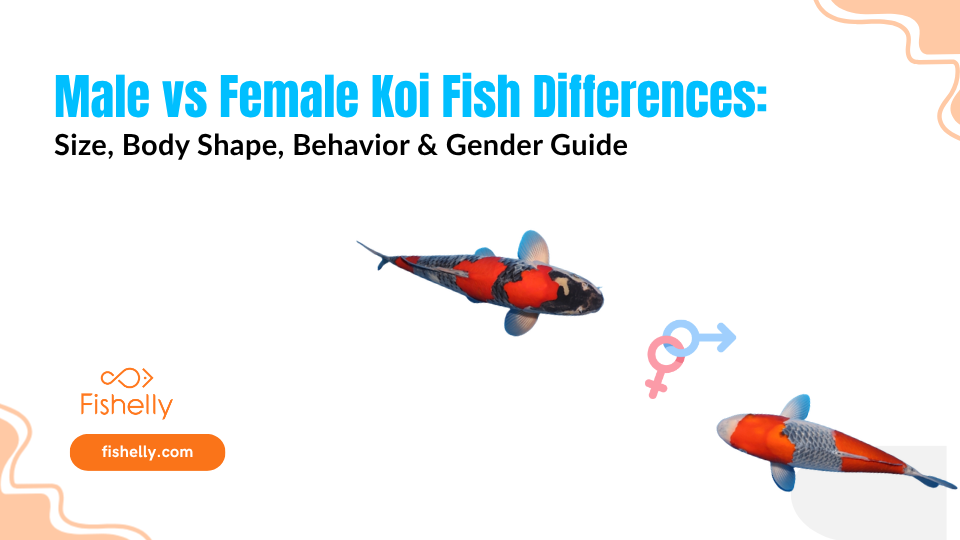
Discover male vs female koi fish differences in body shape, size, fins, behavior, and breeding signs. Learn how to identify koi fish gender easily.
- Body Shape Difference
- Size & Growth Difference
- Fin Appearance & Texture
- Head Shape & Body Proportion
- Color & Pattern Quality
- Skin Quality (Luster vs Softness)
- Behavior Differences
- Feeding Behavior
- Swimming Style
- Breeding Season Indicators
- Faq
- Conclusion
Koi fish are beautiful ornamental fish known for their vibrant colors and graceful movement. For keepers and breeders, knowing the difference between male and female Koi Fish is important for proper care and breeding. Although they look similar at first, differences in body shape, size, fins, and behavior help identify their gender easily.
Body Shape Difference
Body shape is one of the most reliable and visible indicators when identifying the gender of koi fish. As koi mature, differences in structure, weight distribution, and body proportions become much clearer—especially when viewed from above. These differences are closely linked to their biological roles, swimming style, and overall appearance.
Male Koi - Body Shape Difference
- Slim, torpedo-shaped body
Males have a long, narrow, and streamlined body profile
The body tapers smoothly from head to tail, creating a “torpedo” look
This shape is designed for speed and agility in water
- Lightweight and athletic structure
Overall body mass is lower compared to females
Muscle distribution is more compact rather than bulky
Gives a sharp, active, and energetic visual impression
- Narrow and tight abdomen
The midsection remains flat and firm with almost no outward expansion
No visible belly bulge, even during maturity
The underside appears straight rather than rounded
- Uniform body width
Width remains consistent from the head through the midsection to the tail
No sudden widening or heavy areas along the body
Creates a clean, straight, and balanced silhouette
- Sharp and defined body lines
Edges of the body appear more structured and less curved
The transition between head, body, and tail is smooth and tight
Enhances the overall sleek and refined look
- Faster and more responsive movement support
Body design allows quick turns and rapid swimming
Less resistance in water due to slim shape
Often appear more active and restless in the pond
- Less volume and depth
Body lacks thickness when viewed from the side
Appears flatter and less rounded
Gives a lighter and more streamlined presence
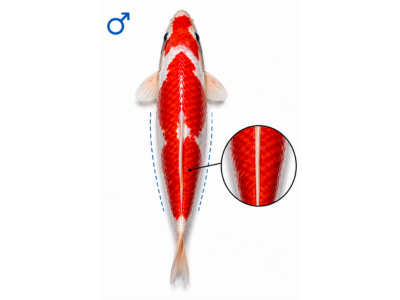
Overall Impression: Sleek, narrow, athletic, and built for speed
Female Koi - Body Shape Difference
- Rounder, wider, and fuller body shape
Females have a broader and deeper body structure
The body expands outward, especially in the midsection
Creates a more voluminous and dominant appearance
- Heavier and more substantial build
Greater body mass and density compared to males
Weight is more noticeable, especially in mature females
Gives a strong and powerful visual presence
- Broad and expanded abdomen
The midsection is significantly wider than the head and tail
Abdomen appears soft, rounded, and full
This is due to egg development and internal capacity
- Visible belly bulge
A clear outward curve is visible when viewed from the top
Becomes more prominent during breeding season
Belly may appear slightly uneven due to egg distribution
- Non-uniform body width
Body widens noticeably after the head region
The rear half may appear heavier than the front
Creates a natural but less streamlined silhouette
- Smooth and curved body lines
Edges of the body are softer and more rounded
Transitions between head, body, and tail are less sharp
Gives a graceful and elegant visual flow
- Slower and more stable movement support
Body shape supports steady, gliding movement rather than speed
Increased water resistance due to wider form
Movement appears calm and controlled
Greater depth and thickness
Body appears thicker when viewed from the side
More volume in both width and depth
Gives a rich, full-bodied appearance
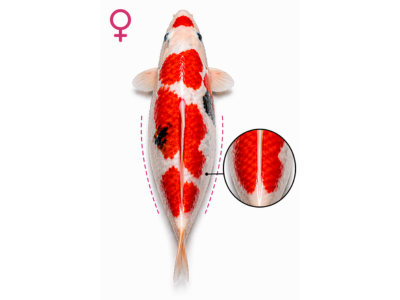
Overall Impression: Wide, heavy, graceful, and built for egg carrying
Observation Tip
-
From a top view, male koi appear narrow, straight, and evenly shaped
-
Female koi appear wider with a noticeable belly bulge and fuller midsection
-
The difference becomes very clear as the fish mature, especially during breeding periods
Size & Growth Difference
Growth and size are among the most important long-term indicators when distinguishing between male and female koi fish. While factors like genetics, water quality, feeding, and pond space heavily influence growth, gender plays a clear role in how koi develop over time. These differences become more visible as koi transition from juvenile to adult stages.
Male Koi Fish – Size & Growth
- Generally smaller overall size
Male koi tend to remain shorter in length compared to females
Even in ideal conditions, they rarely reach the maximum size potential
Typically stay in a medium size range throughout their life
- Lean and lightweight body structure
Body mass is lower, making them lighter in weight
Less body thickness and girth compared to females
Gives a more compact and athletic appearance
- Faster early-stage growth
Grow quickly during juvenile and young stages
Achieve noticeable size early in life
Growth rate is initially impressive but not sustained long-term
- Early growth stabilization
Growth slows down significantly after reaching maturity
Size increase becomes minimal after a certain age
Focus shifts from growth to maintaining body condition
- Maintains slim profile with age
Does not develop bulk or heavy body mass over time
Retains a narrow and streamlined shape
No significant widening of the abdomen
- Lower energy and nutritional demand
Requires comparatively less food to maintain body weight
Efficient metabolism due to smaller body size
Easier to manage in smaller ponds
- Limited maximum size potential
Rarely become the largest fish in the pond
Even older males may remain smaller than younger females
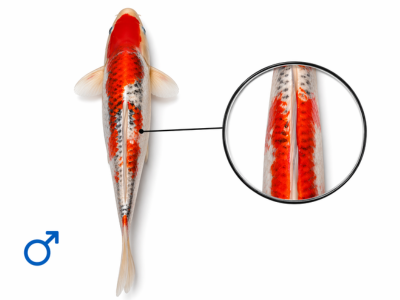
Observation Tip: In most ponds, male koi appear active and well-shaped but rarely stand out as the biggest fish.
Female Koi Fish – Size & Growth
- Significantly larger size potential
Females can grow much longer and heavier than males
Capable of reaching impressive sizes under proper care
Often become the most dominant fish in terms of size
- Heavier and bulkier body mass
Develop greater thickness and girth
Body becomes deeper and more substantial over time
Weight gain is more noticeable compared to males
- Steady and continuous growth pattern
Growth continues over a longer period
Do not stop growing early like males
Show gradual but consistent size increase year after year
- Enhanced growth in optimal conditions
Thrive in large ponds with good water quality
Respond strongly to high-quality nutrition
Can reach their full genetic potential more effectively
- Abdomen expansion due to egg development
Midsection grows wider as eggs develop
Adds both volume and weight to the body
Especially noticeable during breeding season
- Dominant size within groups
Often outgrow males of the same age
Stand out visually due to size and body fullness
Become focal points in the pond
- Higher nutritional and space requirements
Require more food to support growth and egg production
Need more space for proper development
Sensitive to overcrowding when growing large
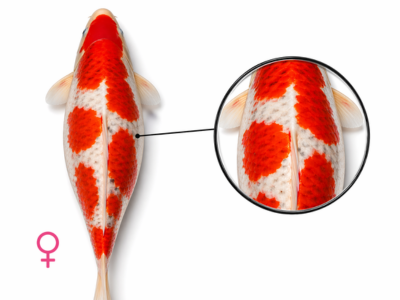
Observation Tip: The largest, widest, and most voluminous koi in a pond is almost always a female.
Quick Comparison
-
Male: Smaller, lighter, early growth stabilization
-
Female: Larger, heavier, continuous growth
-
Growth Pattern: Males grow fast early → Females grow bigger over time
-
Pond Insight: Biggest koi in the pond is most likely female
Fin Appearance & Texture
Fins, especially the pectoral fins (located just behind the gills)—are one of the most reliable and practical indicators for identifying koi gender. By closely observing their shape, thickness, edge definition, and surface texture, you can often distinguish males from females without handling the fish.
Male Koi – Fin Appearance & Texture
- Larger, pointed, and triangular pectoral fins
Fins appear elongated with a sharp, angular shape
The tip of the fin is more pointed rather than rounded
Gives a strong and structured visual appearance
- Thick and rigid fin rays
Fin bones (rays) are thicker and more pronounced
Creates a firm and sturdy fin structure
Helps maintain control during fast swimming
- Sharp and well-defined edges
Edges of the fins look clean and clearly outlined
No softness or rounding at the tips
Enhances the bold and strong look of the fish
- Rough, sandpaper-like texture (breeding season)
Fins develop a coarse texture during spawning period
Feels rough when gently touched
This change is temporary and linked to reproduction
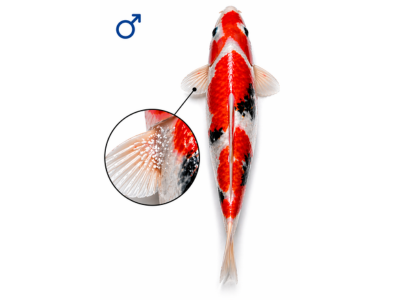
- Presence of breeding tubercles
Small white, grain-like spots appear on fins and gill plates
One of the clearest signs of a male koi
Used to stimulate females during spawning
- Stiff and strong fin movement
Fins move with more force and control in water
Less flexibility compared to females
Supports active and aggressive swimming behavior
- Functional advantage during breeding
Helps males grip and guide females while chasing
Improves stability during rapid movement
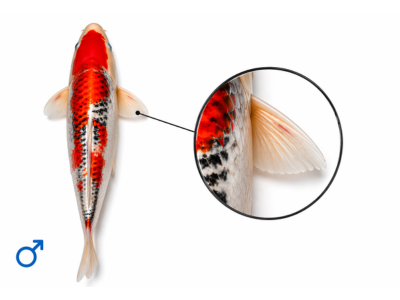
Observation Tip: If fins look pointed, thick, and slightly rough (especially in breeding season), it is most likely a male koi.
Female Koi – Fin Appearance & Texture
- Rounder and fan-shaped pectoral fins
Fins appear wider and more circular
Tips are soft and rounded, not sharp
Creates a gentle and elegant visual effect
- Thin and soft fin rays
Fin structure is lighter and less rigid
Rays are less visible and more delicate
Contributes to smooth movement in water
- Smooth and curved edges
Edges are soft with no sharp definition
Overall fin outline looks more natural and flowing
Enhances graceful appearance
- Silky and smooth texture year-round
No roughness even during breeding season
Skin remains soft to touch at all times
Indicates absence of breeding adaptations
- No breeding tubercles
Fins and gills remain clean without white spots
Key difference from males during spawning
Helps easily distinguish gender in breeding season
- Flexible and gentle fin movement
Fins move smoothly with water flow
High flexibility compared to males
Supports slow, steady, and balanced swimming
- Designed for stability and balance
Helps maintain control in heavier body structure
Supports calm and controlled movement
Less focused on speed or aggression
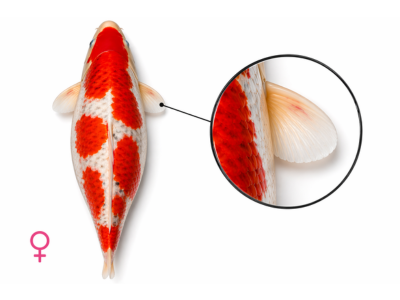
Observation Tip: If fins look rounded, soft, smooth, and flexible, the koi is most likely a female.
Quick Comparison
-
Male: Pointed, thick, rough (in breeding season)
-
Female: Rounded, soft, smooth
-
Texture Test: Rough = Male | Smooth = Female
-
Key Indicator: Breeding tubercles appear only in male
Head Shape & Body Proportion
The body shape and head structure of koi are key visual indicators of gender, influencing both their swimming style and overall appearance.
Male Koi - Head Shape & Body Proportion
- Slightly pointed head
The head tapers more toward the nose, creating a sharper, more streamlined look.
This gives the fish a more agile and active visual impression.
- Slim, torpedo-shaped body
Males have a lean and elongated body profile.
Their streamlined form supports faster, more energetic movement in water.
- Balanced but narrow frame
The body width stays fairly consistent from head to tail.
There is less bulk in the midsection, making them appear lighter.
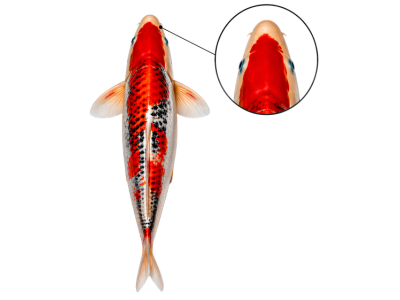
Female Koi - Head Shape & Body Proportion
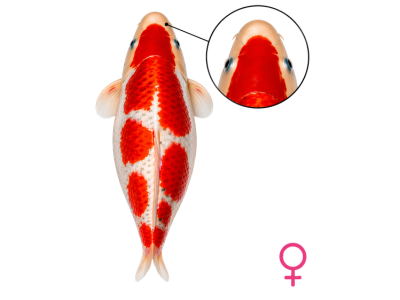
- Broader head and shoulders
The head is wider, especially around the gill area.
The shoulder region appears stronger and more developed.
- Heavier appearance behind the head
The body expands more noticeably after the head.
This creates a fuller, more voluminous shape, especially with maturity.
- Rounded and fuller body
Females have a deeper and thicker body, particularly in the abdomen.
This gives them a graceful yet powerful presence.
Color & Pattern Quality
Color intensity and pattern quality differ between male and female koi, affecting their visual appeal and long-term value.
Male Koi - Color & Pattern Quality
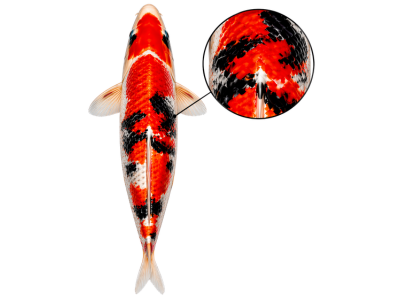
- Brighter and more vibrant colors
Males display stronger and more intense pigmentation.
Their colors stand out more, especially at a younger age.
- Sharp and well-defined patterns
Pattern edges (kiwa) are crisp and clearly separated.
This creates a clean and precise visual effect.
- High contrast appearance
Strong differences between colors make the fish visually striking.
This bold look is especially noticeable when they are moving.
Female Koi -Color & Pattern Quality
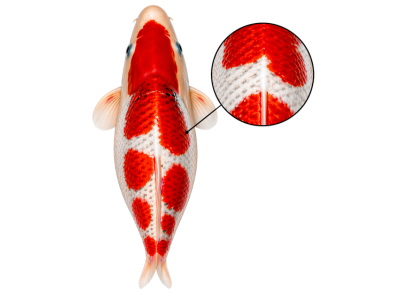
- Softer and more elegant color tones
Colors appear smoother and more refined rather than intense.
This gives a more graceful and classic look.
- Wider and more balanced patterns
Patterns spread more evenly across the body.
The overall design looks harmonious and well-proportioned.
- Better long-term color development
Females maintain and often improve their color as they age.
Their pigmentation becomes more stable over time
Skin Quality (Luster vs Softness)
Skin quality plays a major role in the overall beauty and value of koi fish. It affects how colors appear, how light reflects on the body, and how the fish looks as it matures. Male and female koi show clear differences in luster, texture, and depth of skin quality.
Male Koi – Skin Quality
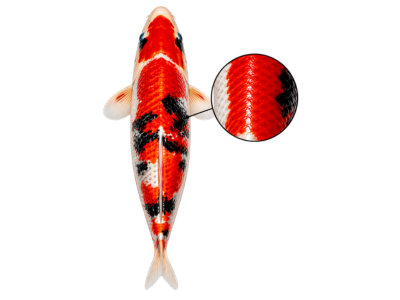
- Shiny and glossy skin
Skin has a bright, reflective surface
Light easily bounces off the scales, creating a sparkling effect
Gives the fish a vibrant and eye-catching appearance
- More reflective color appearance
Colors look sharper due to high light reflection
Enhances contrast between patterns and base color
Especially noticeable in sunlight or clear water
- Thin skin layer
Skin is comparatively thinner than females
Contributes to higher shine but less depth
Fine details in patterns appear more defined
- Instant visual appeal
Looks more attractive at a younger age
Ideal for display due to strong brightness and clarity
Overall Look: Bright, glossy, and highly reflective with strong visual impact
Female Koi – Skin Quality
- Thick and smooth skin texture
Skin appears denser and more uniform
Surface is soft and velvety rather than shiny
Gives a premium and refined feel
- Better depth in color (especially white - shiroji)
White areas look creamy, rich, and deep
Colors appear embedded within the skin rather than on top
Creates a more elegant and high-quality appearance
- Less reflective but more balanced tone
Lower shine compared to males
Colors look smoother and more blended
Provides a natural and graceful visual effect
- Improves with age
Skin quality becomes richer over time
Colors gain depth and stability as the fish matures
Highly valued in show-quality koi
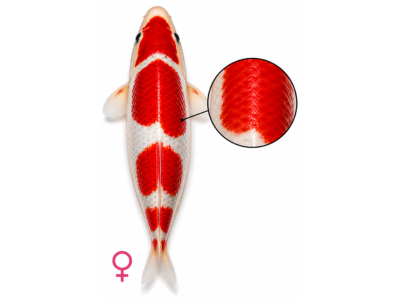
Overall Look: Soft, deep, and luxurious with long-term beauty
Quick Comparison
-
Male: Shiny, glossy, reflective skin
-
Female: Thick, smooth, soft skin with depth
-
Appearance: Male = Bright & sparkling | Female = Rich & elegant
-
Aging Factor: Males look great early → Females improve over time
Behavior Differences
Behavior is one of the most practical ways to identify koi gender especially during the breeding season. While daily activity may look similar, clear differences appear in energy levels, movement patterns, and interaction with other fish.
Male Koi – Behavior Traits
- Active and energetic nature
Constantly swimming and exploring the pond
Shows higher activity levels compared to females
More responsive during feeding time
- Slightly aggressive tendencies
May display dominance over other males
Quick, sharp movements while swimming
Can become more competitive in groups
- Breeding chasing behavior
Actively chases female koi during spawning season
Nudges or bumps females to stimulate egg release
Often seen swimming rapidly around a single female
- High stamina and fast movement
Built for speed and endurance
Frequently changes direction while swimming
Rarely stays still for long periods
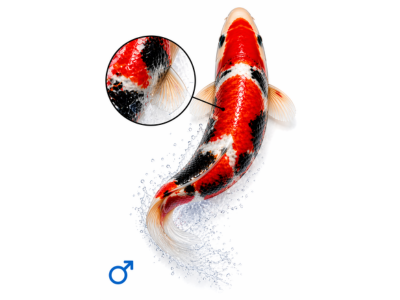
Observation Tip: If a koi is constantly chasing others or showing hyperactive behavior, especially around one fish, it is most likely a male.
Female Koi – Behavior Traits
- Calm and slow-moving nature
Moves gracefully with steady swimming patterns
Spends more time gliding than darting
Prefers relaxed movement over speed
- Passive and non-aggressive
Avoids confrontation with other fish
Does not chase or dominate others
Maintains peaceful interaction in the pond
Receptive during breeding
Gets chased by males rather than initiating action
Moves slowly while being followed
Focused on egg development rather than activity
- Lower energy levels
Conserves energy, especially when carrying eggs
May rest more often compared to males
Movement appears heavier due to body mass
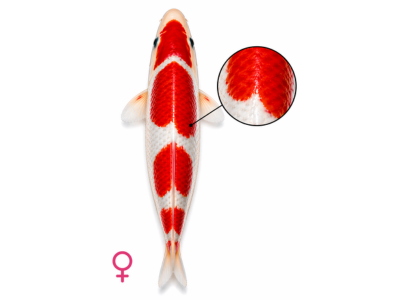
Observation Tip: A koi that swims calmly and is being chased (not chasing) is usually a female.
Quick Comparison
-
Male: Active, energetic, slightly aggressive
-
Female: Calm, slow, passive
-
Breeding Behavior: Male chases → Female gets chased
-
Movement Style: Male = Fast & sharp | Female = Smooth & steady
Feeding Behavior
Feeding time is one of the easiest moments to observe behavioral differences between male and female koi. Their approach to food, speed, and interaction with other fish can reveal clear gender traits.
Male Koi – Feeding Behavior
- Aggressive and competitive feeders
Quickly rush toward food as soon as it is added
Compete actively with other koi for maximum intake
Often push or nudge other fish to reach food first
- Fast and energetic eating style
Eat rapidly with sudden, sharp movements
Frequently come to the surface during feeding
Show excitement and high activity when food is present
- Dominant feeding behavior
Try to take control of feeding spots
May outcompete slower or weaker fish
Rarely miss feeding opportunities
- Consistent appetite
Eat regularly and eagerly
Less affected by surrounding competition
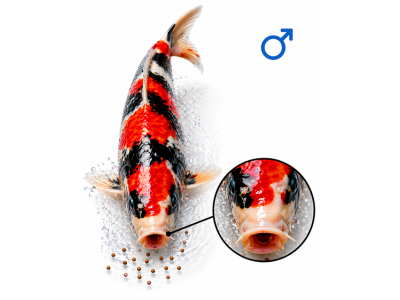
Observation Tip: If a koi aggressively rushes, pushes others, and eats quickly, it is most likely a male.
Female Koi – Feeding Behavior
- Calm and controlled feeding
Approach food slowly and gracefully
Do not rush or compete aggressively
Maintain a relaxed feeding pattern
- Less competitive in groups
May step back when males dominate feeding
Avoid pushing or fighting for food
Prefer peaceful feeding conditions
- May eat less in crowded ponds
Can miss food if surrounded by aggressive feeders
Especially noticeable when multiple males are present
Feeding intake may vary depending on comfort
- Steady but selective appetite
Eat at a moderate pace
Focus more on balanced intake rather than speed
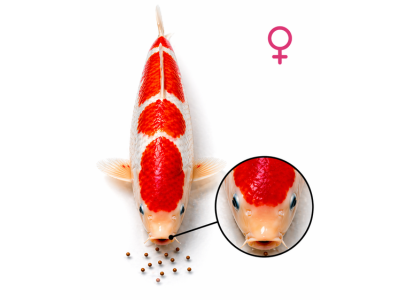
Observation Tip: A koi that eats slowly, avoids competition, and stays calm during feeding is usually a female.
Quick Comparison
-
Male: Aggressive, fast, competitive eater
-
Female: Calm, slow, less competitive
-
Feeding Style: Male = Rush & compete | Female = Relax & feed
-
Pond Insight: Males dominate feeding → Females may get less food
Swimming Style
Swimming style is a subtle but very useful clue when identifying koi gender. By observing how a koi moves through water, changes direction, and maintains energy, you can often distinguish between males and females—especially in a relaxed pond environment.
Male Koi – Swimming Style
- Fast and sharp movements
Swim with quick bursts of speed
Frequently make sudden turns and direction changes
Movement appears energetic and sometimes restless
- Constant activity
Rarely stay still; always exploring or moving
Continuously patrol different areas of the pond
Highly responsive to external stimuli (food, movement, other fish)
- Energetic and reactive behavior
React quickly to disturbances or feeding time
Often seen darting toward the surface
Movement looks more athletic and forceful
- High stamina swimming pattern
Maintain active swimming for long periods
Built for speed rather than smoothness
Often lead or chase other fish
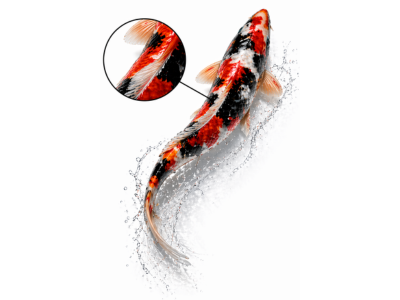
- Observation Tip: If a koi is always moving, making quick turns, and showing high energy it is most likely a male.
**Female Koi – Swimming Style
- Slow, smooth, and graceful movement
Swim with steady, flowing motion
Turns are gentle and wide rather than sharp
Movement appears calm and elegant
- Less energetic behavior
Spend more time gliding than actively swimming
Often stay in one area for longer periods
Conserve energy, especially when mature or carrying eggs
- Balanced and controlled motion
Maintain consistent speed without sudden bursts
Movement feels heavier but more stable
Less reactive to sudden changes in environment
- Relaxed swimming pattern
Prefer calm, uninterrupted movement
Rarely engage in chasing or rapid swimming
Appear more peaceful in group settings
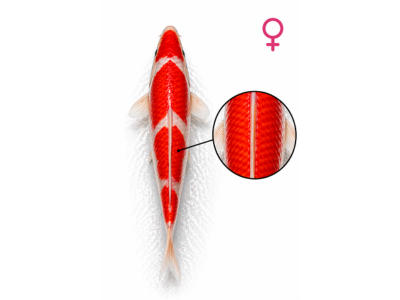
Observation Tip: A koi that glides smoothly with slow, controlled motion is usually a female.
Quick Comparison
-
Male: Fast, sharp, highly active
-
Female: Slow, smooth, graceful
-
Movement Style: Male = Quick & reactive | Female = Calm & flowing
-
Energy Level: Male = High | Female = Moderate to low
Breeding Season Indicators
Breeding season is the most reliable time to identify the gender of koi fish. During spawning, physical changes and behaviors become very obvious, making it much easier to distinguish males from females.
Male Koi – Breeding Season Indicators
- Development of breeding tubercles
Small white, sand-like spots appear on gill plates and pectoral fins
Texture feels rough, similar to sandpaper
Temporary feature that appears only during breeding season
- Chasing and pushing behavior
Actively chase female koi around the pond
Nudge or push females to stimulate egg release
Often multiple males follow a single female
- Highly active and energetic
Increased movement and excitement levels
Constant swimming and interaction with females
Rarely rest during spawning activity
- Dominant reproductive role
Compete with other males for access to females
Stay close to females throughout the spawning period
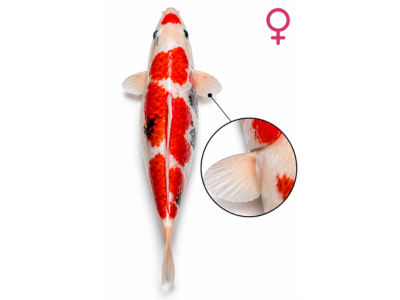
Observation Tip: If you see white spots on fins/gills and aggressive chasing behavior, it is definitely a male koi.
Female Koi – Breeding Season Indicators
- Swollen abdomen due to eggs
Belly becomes noticeably round and enlarged
Soft to touch due to egg development
Body appears heavier and wider from top view
- Slower and heavier movement
Reduced activity compared to males
Movement becomes slower due to carrying eggs
Often tries to avoid excessive chasing
- Egg releasing during spawning
Releases eggs into water or onto surfaces (plants, brushes)
Occurs when stimulated by male chasing
Eggs are later fertilized by males
- Passive reproductive role
Does not chase or initiate interaction
Focused on egg carrying and release
Observation Tip: A koi with a swollen belly that is being chased and moving slowly is most likely a female.
Quick Comparison
-
Male: Tubercles, chasing, hyperactive
-
Female: Swollen belly, slow movement, egg release
-
Breeding Role: Male = Initiates | Female = Responds
-
Clear Sign: White spots (male) vs egg-filled belly (female)
Faq
1. How can I tell if my koi fish is male or female?
The easiest way is to look at the body shape and behavior. Male koi are slim, active, and fast swimmers, while female koi are wider, heavier, and move more calmly. During breeding season, males chase females, which makes identification even easier.
2. Which koi fish grows bigger – male or female?
Female koi usually grow much bigger and heavier than males. If you see the largest fish in your pond, it is most likely a female. Males stay smaller and slimmer throughout their life.
3. Do male and female koi look different in body shape?
Yes, males have a slim, straight, torpedo-shaped body, while females have a rounder body with a fuller belly, especially when mature or carrying eggs.
4. Can I identify koi gender by their fins?
Yes, it’s a very useful method. Male koi have pointed, thick fins that may feel rough during breeding season, while female koi have soft, round, and smooth fins.
5. Why is one of my koi fish chasing the others?
This is usually a sign of a male koi, especially during breeding season. Males chase females to stimulate egg release, so the fish being chased is likely a female.
6. Do male and female koi behave differently?
Yes, male koi are more active, energetic, and sometimes aggressive. Female koi are calmer, slower, and more peaceful in the pond.
7. Which koi has better colors – male or female?
Male koi usually have brighter and more vibrant colors at a young age. Female koi may look softer but develop deeper and richer colors over time.
8. Can I identify koi gender by size only?
Size can help, but it’s not always accurate alone. Generally, bigger koi are female, but you should also check body shape, fins, and behavior for confirmation.
9. What are breeding tubercles in koi fish?
Breeding tubercles are small white spots that appear on male koi’s fins and gills during breeding season. They feel rough and are a clear sign that the koi is male.
10. Why does my koi have a big belly?
If a koi has a round, swollen belly, it is most likely a female carrying eggs, especially during breeding season.
11. Do male koi eat differently than females?
Yes, males are aggressive feeders and rush toward food quickly. Females eat more calmly and may stay back if males are competing for food.
12. Is it important to know koi fish gender?
Yes, it helps in proper pond management, balanced feeding, and successful breeding. Knowing the gender also helps avoid overcrowding and stress in the pond.
Conclusion
Understanding the difference between male and female koi fish helps in better pond management and breeding. Males are usually slimmer, more active, and brighter in color, while females are larger, fuller, and more graceful with deeper coloration over time. By observing body shape, behavior, and breeding signs, you can easily identify their gender and maintain a healthy, balanced pond.