Male vs Female Molly Fish - How to Tell the Difference

Discover the key differences between male and female Molly fish, including body size, fins, colours, behaviour, breeding traits, and pregnancy indicators.
- Body Shape of Molly Fish
- Overall Size of Molly Fish
- Anal Fin (Gonopodium) of Molly Fish
- Dorsal Fin of Molly Fish
- Tail (Caudal Fin) of Molly Fish
- Colour Intensity of Molly Fish
- Behaviour Difference of Molly Fish
- Aggression Level of Molly Fish
- Belly Shape of Molly Fish
- Gravid Spot of Molly Fish
- Breeding Role of Molly Fish
- Swimming Pattern of Molly Fish
- Pregnancy & Reproduction of Molly Fish
- Best Male-to-Female Ratio for Molly Fish
- Faq
- Conclusion
Molly fish are among the most popular freshwater aquarium fish, but many aquarists find it difficult to distinguish between males and females, especially when the fish are young. Correctly identifying the gender is essential for successful breeding, maintaining a balanced aquarium, and providing proper care. As Molly fish mature, they develop several noticeable differences in their body shape, size, fins, colouration, behaviour, swimming patterns, and reproductive features. In this guide, you'll discover the 14 most accurate ways to identify male and female Molly fish, helping you recognise their gender with confidence and create a healthier, more peaceful aquarium environment.
Body Shape of Molly Fish
Body shape is one of the easiest and most reliable ways to tell the difference between male and female Molly fish. As they mature, noticeable differences develop in their size, body width, and overall appearance. Males are typically slimmer and more streamlined, while females have a broader, rounder body that is adapted for carrying fry. Although factors such as diet, age, and genetics can influence growth, body shape remains one of the most accurate physical characteristics for identifying a Molly fish's gender.
Male Molly Fish
Male Molly fish develop a slim, elongated, and streamlined body as they mature. Their narrow abdomen and lightweight build allow them to swim quickly and remain highly active throughout the aquarium. Adult males usually appear more graceful and athletic than females because they are built for speed, courtship, and constant movement rather than reproduction.
-
Slim and Elongated Body - Gives males a sleek, streamlined appearance for efficient swimming.
-
Narrow Abdomen - Remains thin because males do not carry developing fry.
-
Streamlined Profile - Reduces water resistance, allowing quick and smooth movement.
-
Lightweight Build - Makes males more agile and active throughout the aquarium.
-
Athletic Appearance - Creates a lean, energetic look compared to females.
-
Faster Swimming Ability - Helps males chase females during courtship and breeding.
-
Smaller Body Frame - Mature males are generally smaller than female Mollies.
-
Less Rounded Belly - The abdomen stays relatively flat even in adulthood.
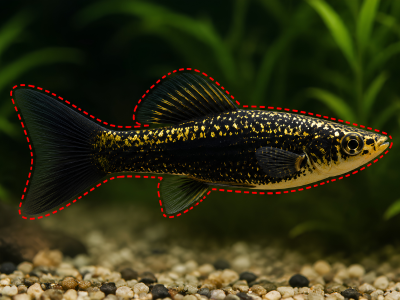
Female Molly Fish
Female Molly fish develop a broader, deeper, and more rounded body as they mature. Their naturally fuller abdomen is designed to carry developing fry, making them appear larger and stockier than males. During pregnancy, the belly expands significantly, making the female's body even more rounded and noticeably heavier.
-
Broad Body Shape - Provides extra space for carrying developing fry.
-
Round Abdomen - Gives females a naturally fuller and wider appearance.
-
Fuller Belly - Makes females look noticeably rounder than males.
-
Wider Body Profile - Creates a deeper, more robust body structure.
-
Stockier Build - Supports pregnancy and healthy fry development.
-
Larger Body Mass - Females usually grow bigger and heavier than males.
-
More Rounded Appearance - Gives the body softer curves than the slim male shape.
-
Belly Enlarges During Pregnancy - Expands significantly as the fry develop before birth.

Overall Size of Molly Fish
Overall size is another reliable characteristic for distinguishing male and female Molly fish. As they mature, females generally grow larger, taller, and heavier than males. While the exact size varies depending on the Molly variety, diet, and aquarium conditions, adult females consistently have a bigger body, whereas males remain smaller and more compact.
Male Molly Fish
Male Molly fish are generally smaller and lighter than females. They reach sexual maturity earlier and usually stop growing once fully mature. Their compact size and slim build make them agile swimmers, allowing them to move quickly around the aquarium during courtship and while searching for food.
-
Usually 2.5 - 3.5 Inches - Most adult males grow between 2.5 and 3.5 inches, depending on the Molly variety.
-
Smaller Overall Size - Males remain noticeably smaller than females throughout adulthood.
-
Lightweight Body - Their lighter body makes them faster and more agile swimmers.
-
Less Bulky Appearance - Males have a lean body with less overall body mass.
-
Slower Weight Gain - Since they do not carry fry, males typically gain less weight than females.
-
Compact Build - Their smaller frame allows for quick movement and active behaviour.
-
Slim Profile - The narrow body gives males a sleek and streamlined appearance.
-
Smaller Head - Male Mollies usually have a slightly smaller and narrower head than females.
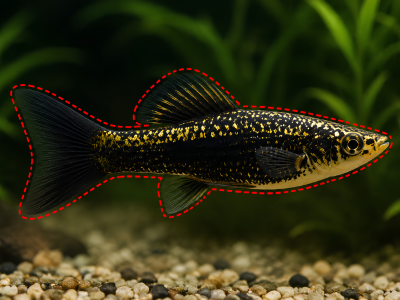
Female Molly Fish
Female Molly fish grow larger, taller, and heavier than males as they mature. Their bigger body is specially adapted to carry developing fry, making them appear fuller and more robust. Adult females are often the largest Molly fish in the aquarium, making them easy to identify even from a distance.
-
Usually 3 - 5 Inches - Most adult females reach between 3 and 5 inches, depending on the species and care.
-
Larger Body Size - Females grow noticeably bigger than males once fully mature.
-
Heavier Build - Their increased body weight supports pregnancy and healthy fry development.
-
Wider Abdomen - The abdomen is broader to provide space for carrying developing fry.
-
Bigger Head - Females typically have a slightly larger and broader head than males.
-
More Robust Body - Their stronger body structure gives them a fuller and sturdier appearance.
-
Taller Body Profile - Females appear deeper-bodied when viewed from the side.
-
Dominant Size in the Aquarium - Adult females are usually the largest and most noticeable Molly fish in a community tank.
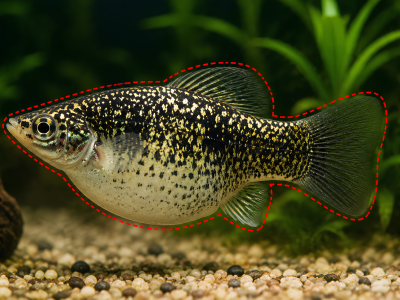
Anal Fin (Gonopodium) of Molly Fish
The anal fin is the most accurate and reliable feature for identifying the gender of a Molly fish. As the fish matures, males develop a specialised reproductive organ called a gonopodium, while females retain a normal fan-shaped anal fin. Unlike body shape or size, which can vary with age and diet, the anal fin provides a clear and permanent difference between male and female Mollies.
Male Molly Fish
Male Molly fish develop a long, narrow anal fin called a gonopodium once they reach sexual maturity. This modified fin is used to transfer sperm and fertilise females internally during breeding. Because no female Molly develops a gonopodium, it is considered the most reliable way to identify a mature male.
-
Long Gonopodium - The anal fin is elongated into a tube-like reproductive organ.
-
Pointed Shape - The fin ends in a narrow, pointed tip rather than a rounded edge.
-
Thin Appearance - The gonopodium is much slimmer than a normal anal fin.
-
Used for Fertilisation - Transfers sperm to the female during internal fertilisation.
-
Folded Backward - Usually rests close to the body and points towards the tail.
-
Most Reliable Gender Indicator - The easiest and most accurate feature for identifying a male Molly.
-
Visible After Maturity - Develops clearly once the fish reaches sexual maturity.
-
Easy to Recognise - Its long, rod-like shape makes males easy to distinguish from females.

Female Molly Fish
Female Molly fish retain a normal fan-shaped anal fin throughout their lives. This fin is primarily used for swimming, steering, and maintaining balance in the water. Since females never develop a gonopodium, their broad, rounded anal fin is one of the clearest signs of their gender.
-
Fan-Shaped Fin - The anal fin remains broad and open throughout life.
-
Rounded Edges - The fin has smooth, rounded edges instead of a pointed tip.
-
Wide Fin Base - A broader base provides better stability while swimming.
-
No Gonopodium - Females never develop the reproductive organ found in males.
-
Used for Swimming - Helps with steering, braking, and maintaining balance.
-
Stable Body Movement - Supports smooth and controlled movement through the aquarium.
-
Clearly Different from Males - The fan-shaped fin contrasts noticeably with the male's gonopodium.
-
Easy to Identify - The broad, rounded anal fin makes female Mollies easy to recognise.

Dorsal Fin of Molly Fish
The dorsal fin is another helpful feature for distinguishing male and female Molly fish, particularly in Sailfin Molly varieties where the difference is much more noticeable. Male Mollies typically have a taller, larger, and more decorative dorsal fin, while females have a shorter and simpler fin designed mainly for stability and swimming. Although the size difference may be subtle in some Molly varieties, the dorsal fin can still provide useful clues when identifying gender.
Male Molly Fish
Male Molly fish usually develop a taller and more eye-catching dorsal fin as they mature. During courtship, they often raise and spread this fin to impress females and display dominance over other males. The fin is especially large and striking in Sailfin Mollies.
-
Taller Dorsal Fin - Extends higher than the female's fin, giving a more impressive appearance.
-
Pointed Fin Tip - The dorsal fin often ends in a sharper, more pointed tip.
-
More Extended Fin Rays - Longer fin rays create a larger and more elegant fin.
-
Displays During Courtship - Raised to attract females and compete with rival males.
-
Elegant Appearance - Gives males a graceful and attractive profile in the aquarium.
-
Larger in Sailfin Mollies - Particularly prominent in Sailfin varieties, where it resembles a sail.
-
More Noticeable - The taller fin makes mature males easier to recognise.
-
Attractive Profile - Enhances the overall appearance and display behaviour of the fish.

Female Molly Fish
Female Molly fish have a shorter, rounder, and less decorative dorsal fin than males. Their fin is designed primarily for balance, stability, and efficient swimming rather than courtship displays. As a result, the dorsal fin blends naturally with the body and appears much less prominent. Short Dorsal Fin - Smaller in height compared to mature males.
-
Rounded Tip - The fin usually has a smooth, rounded edge rather than a pointed one.
-
Less Decorative - Lacks the extended and ornamental appearance seen in males.
-
Smaller Fin Area - Covers less surface area, giving a more compact look.
-
Simple Appearance - Designed for function rather than display.
-
Compact Shape - Remains neat and proportionate to the body size.
-
Less Prominent - Does not stand out as much as the male's dorsal fin.
-
Balanced Body Proportions - Complements the female's broader and rounder body shape.

Tail (Caudal Fin) of Molly Fish
The tail, also known as the caudal fin, can provide additional clues when identifying the gender of a Molly fish. Male Mollies generally have a larger, more colourful, and better-developed tail that enhances their appearance during courtship displays. In contrast, females have a shorter and more practical tail designed for efficient swimming rather than attracting mates. While the difference may vary between Molly varieties, the tail fin becomes more noticeable as the fish matures.
Male Molly Fish
Male Molly fish usually develop a larger and more decorative caudal fin than females. Their tail often displays brighter colours and wider fin extensions, making them more attractive during courtship. This elegant tail also contributes to their graceful and active swimming style.
-
Larger Tail Spread - The tail opens wider, creating a more impressive display.
-
Sharper Edges - The fin often has a more defined and pointed outline.
-
More Colourful - Brighter colours and patterns help attract females during breeding.
-
Better Fin Extension - Longer fin rays give the tail a fuller and more elegant appearance.
-
Elegant Swimming - The larger tail enhances smooth and graceful movement.
-
Displays During Courtship - Frequently spread to impress females and establish dominance.
-
**Strong Fin Movement - Powerful tail strokes support fast and active swimming.
-
Attractive Appearance - Gives males a more striking and ornamental look in the aquarium.

Female Molly Fish
Female Molly fish have a shorter, simpler, and more functional caudal fin. Their tail is designed primarily for stability and efficient swimming rather than display. Although healthy females can still have attractive colours, their tail is generally less elaborate than that of males.
-
Shorter Tail - The caudal fin is smaller and less extended than in males.
-
Rounded Edges The tail usually has softer, rounded edges.
-
Less Colourful - Colours are often more subtle and less vibrant than those of males.
-
Compact Fin Shape - The tail remains neat and proportionate to the body.
-
Smooth Swimming - Provides steady and efficient movement through the water.
-
Functional Appearance - Built for everyday swimming instead of courtship displays.
-
Less Fin Extension - Fin rays are shorter, giving the tail a simpler look.
-
Balanced Body Proportions - Complements the female's broader and more rounded body shape.

Colour Intensity of Molly Fish
Colour intensity is another useful characteristic for distinguishing male and female Molly fish. As they mature, male Mollies usually develop brighter, richer, and more vibrant colours to attract females during breeding. Females, on the other hand, tend to have softer and more natural colouration that remains fairly consistent throughout their lives. Although colour can vary depending on the Molly variety, genetics, diet, and water quality, males are generally more colourful than females.
Male Molly Fish
Male Molly fish are known for their bright and eye-catching colours, which become more intense as they mature. Their vibrant body and fin colours play an important role during courtship, helping them attract females and stand out in the aquarium.
-
More Vibrant Colours - Display brighter and richer colours than females.
-
Better Colour Contrast - Show stronger differences between body and fin colours.
-
Metallic Shine - Often develop a glossy or shimmering appearance under aquarium lighting.
-
Rich Black, Orange or White - Colours appear deeper and more intense in many Molly varieties.
-
Brighter Fins - Dorsal, tail, and other fins usually have stronger colouration.
-
More Eye-Catching - Their vivid appearance makes them stand out in community aquariums.
-
Colour Increases with Age - Colours become more vibrant as males reach maturity.
-
Best Display Fish - Their striking colours make them a favourite choice for ornamental aquariums.
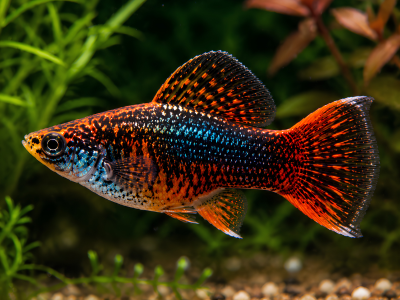
Female Molly Fish
Female Molly fish generally have softer and more subtle colours than males. Their colouration is designed more for natural camouflage than display and usually remains stable throughout adulthood.
-
Softer Colours - Display gentler and more subdued shades than males.
-
Less Vibrant - Colours are typically less bright and less intense.
-
Reduced Metallic Shine - Usually lack the glossy, shimmering appearance seen in males.
-
Natural Appearance - Their colouration blends naturally with the environment.
-
Stable Colouration - Colours remain fairly consistent throughout life.
-
Less Contrast - Show smoother transitions between body and fin colours.
-
Simple Beauty - Their subtle colours give them a calm and elegant appearance.
-
Colours Remain Consistent - Colour intensity changes very little after reaching maturity.

Behaviour Difference of Molly Fish
Behaviour is another helpful way to distinguish male and female Molly fish, especially once they reach maturity. Male Mollies are generally more active, energetic, and territorial, while females tend to be calmer, more peaceful, and social. Although behaviour can vary depending on tank conditions and individual personality, these patterns are commonly observed in healthy Molly fish.
Male Molly Fish
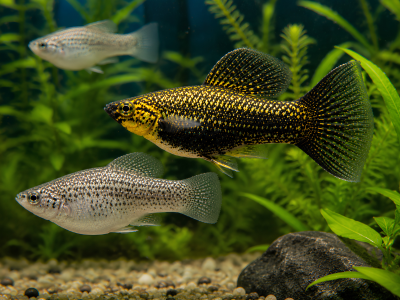
Male Molly fish are highly active and constantly on the move. They spend much of their time exploring the aquarium, chasing females during courtship, and displaying dominance over other males. Their energetic nature makes them one of the most noticeable fish in the tank. Highly Active - Constantly swims around the aquarium searching for food or mates.
-
Constant Swimmer - Rarely stays in one place and remains active throughout the day.
-
Frequently Chases Females - Pursues females during courtship and breeding.
-
Curious Behaviour - Regularly explores new decorations, plants, and tank areas.
-
Displays Dominance - May challenge or compete with other males for territory and females.
-
Patrols Territory - Often swims around its preferred area to establish dominance.
-
Competitive - Competes with rival males during breeding and feeding.
-
More Energetic - Shows higher activity levels than female Mollies in most aquariums.
Female Molly Fish
Female Molly fish are calmer, gentler, and more peaceful than males. They usually swim at a relaxed pace, interact well with other community fish, and spend less time displaying aggressive or competitive behaviour. Pregnant females may also become more reserved and seek quiet areas before giving birth.
-
Peaceful Nature - Generally friendly and non-aggressive towards other fish.
-
Relaxed Swimmer - Swims calmly without the constant activity seen in males.
-
Social Behaviour - Mixes well with other Mollies and peaceful community fish.
-
Less Chasing - Rarely chases other fish except during feeding.
-
Calm Personality - Displays a gentle and less territorial temperament.
-
**Gentle Movement **- Moves smoothly and steadily around the aquarium.
-
Hides Before Birth - Pregnant females often seek sheltered areas before giving birth.
-
More Tolerant - Usually accepts the presence of other fish without frequent conflicts.

Aggression Level of Molly Fish
Aggression level is another noticeable difference between male and female Molly fish. Male Mollies are generally more territorial and competitive, particularly during breeding, while females are calmer and more peaceful in community aquariums. Although Mollies are considered friendly fish overall, males may display aggressive behaviour when competing for mates or territory, especially in smaller or overcrowded tanks.
Male Molly Fish
Male Molly fish are more territorial and assertive, especially when multiple males share the same aquarium. They often compete for females, chase rivals, and establish dominance within the tank. Providing enough space and maintaining a higher female-to-male ratio can help reduce aggression.
-
More Territorial - Frequently claims favourite areas of the aquarium.
-
Chases Rival Males - Pursues other males to establish dominance.
-
Competes for Females - Constantly competes for breeding opportunities.
-
Displays Dominance - Uses chasing and fin displays to show superiority.
-
Can Stress Females - Persistent courtship may cause females to become stressed.
-
More Breeding Aggression - Aggression usually increases during the breeding season.
-
Defends Favourite Areas - May guard preferred hiding spots or swimming spaces.
-
Occasionally Nips Fins - Can nip the fins of rival males during territorial disputes.

Female Molly Fish
Female Molly fish are less aggressive and more tolerant, making them excellent additions to peaceful community aquariums. They rarely display territorial behaviour and usually coexist well with other fish. However, pregnant females may become slightly protective or seek secluded areas before giving birth.
-
Less Territorial - Rarely claims or defends specific areas of the aquarium.
-
Rarely Aggressive - Seldom shows aggressive behaviour towards tank mates.
-
Peaceful with Tank Mates - Coexists well with other peaceful fish species.
-
More Tolerant - Easily accepts the presence of other Mollies and community fish.
-
Only Protective Before Birth - May become slightly defensive when close to giving birth.
-
Less Competitive - Shows little interest in competing for territory or mates.
-
Easy Community Fish - Ideal for peaceful community aquariums due to its gentle nature.
-
Gentle Temperament - Displays calm and friendly behaviour throughout adulthood.
Belly Shape of Molly Fish
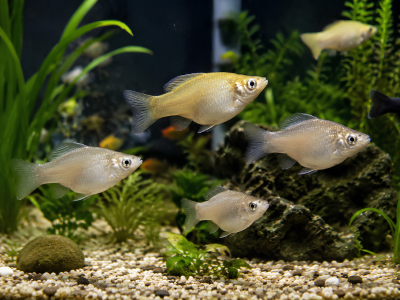
Belly shape is one of the easiest physical characteristics for distinguishing male and female Molly fish, especially during adulthood. Male Mollies maintain a slim and flat abdomen throughout their lives, while females have a rounder and fuller belly that becomes noticeably larger during pregnancy. Observing the abdomen is also one of the best ways to identify a pregnant female Molly.
Male Molly Fish
Male Molly fish have a flat and slender abdomen that remains consistent throughout adulthood. Since males do not carry developing fry, their belly rarely changes in size unless they are overfed or experiencing health issues. Their lean abdomen contributes to their streamlined and athletic appearance.
-
Flat Abdomen - Remains slim and level throughout adulthood.
-
Slim Stomach - Gives males a lean and streamlined body shape.
-
No Swelling - Never enlarges due to pregnancy.
-
Consistent Body Shape - Maintains a similar appearance throughout life.
-
Lean Appearance - Creates a sleek and athletic look.
-
Smaller Waist - The midsection remains narrow compared to females.
-
Athletic Build - Supports quick and agile swimming.
-
Rarely Changes - Belly size changes very little under normal conditions.

Female Molly Fish
Female Molly fish naturally have a rounder and fuller abdomen than males. As pregnancy progresses, their belly gradually expands to accommodate developing fry and may become noticeably box-shaped just before giving birth. This makes belly shape one of the clearest indicators of a female Molly.
-
Round Belly - Naturally fuller than the belly of a male.
-
Fuller Abdomen - Provides space for carrying developing fry.
-
Swollen During Pregnancy - Enlarges significantly as the fry grow.
-
Box-Shaped Before Birth - Often becomes square or box-like shortly before giving birth.
-
Larger Stomach - Appears noticeably bigger than that of males.
-
Easy Pregnancy Indicator - A swollen belly is one of the clearest signs of pregnancy.
-
More Body Depth - The deeper abdomen gives females a fuller body profile.
-
Changes Throughout Breeding - Belly size increases during pregnancy and returns to normal after giving birth.

Gravid Spot of Molly Fish
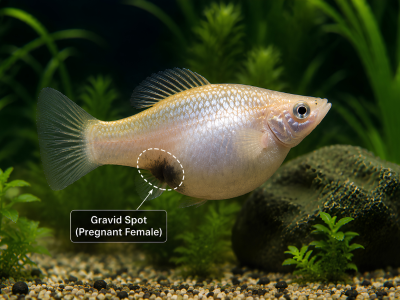
The gravid spot is one of the most reliable signs for identifying a pregnant female Molly fish. It is a dark patch located near the anal fin where developing fry can often be seen through the body wall. Male Mollies never develop a gravid spot because they do not become pregnant. This feature is most visible in light-coloured Molly varieties and becomes darker as the female approaches birth.
Male Molly Fish
Male Molly fish never develop a gravid spot because they do not carry developing fry. Their abdomen remains slim and free from any dark patch near the anal fin throughout their lives, making this an easy feature to distinguish from pregnant females.
-
No Gravid Spot - Males never develop the dark pregnancy patch.
-
No Pregnancy - Cannot carry or give birth to fry.
-
Belly Remains Slim - The abdomen stays flat without pregnancy-related changes.
-
No Dark Patch - No black or brown area appears near the anal fin.
-
Permanent Body Shape - The abdominal area remains consistent throughout adulthood.
-
Easy to Distinguish - The absence of a gravid spot helps identify males.
-
Male Characteristic - A clear feature that separates males from pregnant females.
-
Never Carries Fry - Males do not develop embryos or show pregnancy signs.

Female Molly Fish
Female Molly fish develop a gravid spot when they become pregnant. This dark patch appears just above the anal fin and usually becomes larger and darker as the developing fry grow. It is one of the easiest and most reliable indicators that a female Molly is carrying fry and is approaching the time of birth.
-
Dark Gravid Spot - Appears as a dark patch on the lower abdomen during pregnancy.
-
Located Near Anal Fin - Found just above the anal fin at the rear of the belly.
-
Becomes Darker Before Birth - The spot usually darkens as delivery approaches.
-
Easy Pregnancy Indicator - One of the clearest signs that a female is pregnant.
-
Enlarges with Pregnancy - May appear larger as the fry continue to develop.
-
Visible in Light-Coloured Mollies - Easier to observe in white, gold, cream, or other light-coloured varieties.
-
Helps Predict Birth - A darker, more pronounced spot often indicates that birth is near.
-
Present Only in Females - This feature develops only in pregnant female Molly fish.
Breeding Role of Molly Fish
The breeding role is one of the biggest differences between male and female Molly fish. Male Mollies are responsible for fertilising the female internally using a specialised reproductive organ called the gonopodium, while females carry the developing fry inside their body before giving birth to live young. Since Molly fish are livebearers, both sexes play different roles during reproduction, but neither parent provides care for the fry after birth.
Male Molly Fish
Male Molly fish play the role of fertilising the female during breeding. They actively search for females, display courtship behaviour, and use their gonopodium to transfer sperm for internal fertilisation. After mating, males do not participate in protecting or raising the fry.
-
Fertilises Eggs Internally - Transfers sperm to the female through internal fertilisation.
-
Uses Gonopodium - Uses the modified anal fin as a reproductive organ during mating.
-
Chases Females - Actively pursues females to initiate breeding.
-
Initiates Mating - Performs courtship displays before attempting to mate.
-
Constant Breeding Behaviour - Frequently seeks mating opportunities once sexually mature.
-
Displays Fins - Raises and spreads its fins to attract females.
-
More Active During Mating - Activity levels increase significantly during the breeding period.
-
No Parental Care - Does not protect or care for the fry after they are born.

Female Molly Fish
Female Molly fish are responsible for carrying and giving birth to live fry. After internal fertilisation, they carry the developing fry for about 25–35 days before giving birth. Female Mollies can also store sperm, allowing them to produce multiple broods from a single mating. Like males, they do not provide parental care after birth.
-
Gives Live Birth - Delivers fully formed, free-swimming fry instead of laying eggs.
-
Carries Fry Internally - Develops the fry inside the body until birth.
-
Pregnancy Lasts 25 - 35 Days - The gestation period typically ranges from 25 to 35 days.
-
Can Store Sperm - Able to produce several broods after a single mating.
-
Produces Multiple Broods - May give birth multiple times without mating again.
-
Seeks Hiding Places - Often looks for sheltered areas before giving birth.
-
Delivers Live Fry - Gives birth to healthy, independent fry that can swim immediately.
-
No Parental Care After Birth - Does not protect or raise the fry once they are born.

Swimming Pattern of Molly Fish
Swimming pattern is another useful characteristic for distinguishing male and female Molly fish. Male Mollies are generally fast, energetic, and constantly active, frequently exploring every part of the aquarium and chasing females during courtship. Female Mollies have a calmer and steadier swimming style, especially during pregnancy when they conserve energy and rest more often. Although individual behaviour may vary, these swimming patterns are commonly observed in healthy adult Mollies.
Male Molly Fish
Male Molly fish are fast and energetic swimmers that rarely stay in one place. Their active swimming behaviour helps them search for food, establish territory, and pursue females during breeding. Their constant movement makes them one of the most active fish in the aquarium.
-
Fast Swimmer - Moves quickly and confidently throughout the aquarium.
-
Constant Movement - Rarely stays still and remains active most of the day.
-
Explores All Tank Levels - Frequently swims in the top, middle, and bottom areas of the tank.
-
Chases Females - Often follows females during courtship and breeding.
-
Active Throughout the Day - Maintains high activity levels from morning to evening.
-
Sharp Turns - Changes direction quickly while swimming or chasing other fish.
-
High Energy - Displays an energetic and lively swimming style.
-
Rarely Rests - Spends very little time resting compared to females.

Female Molly Fish
Female Molly fish have a calm and controlled swimming pattern. They move at a slower, more relaxed pace and spend less time chasing or competing with other fish. Pregnant females become even less active as they prepare to give birth and often rest in quiet areas of the aquarium.
-
Moderate Swimming - Swims at a comfortable and steady pace.
-
Smooth Movements - Displays gentle and controlled swimming behaviour.
-
Slower Pace - Moves more slowly than the energetic males.
-
Conserves Energy - Avoids unnecessary activity, especially during pregnancy.
-
Rests More When Pregnant - Frequently pauses or hides to prepare for giving birth.
-
Gentle Turns - Makes slow and graceful changes in direction.
-
Calm Behaviour - Maintains a peaceful and relaxed swimming style.
-
Less Active Than Males - Shows lower activity levels throughout the day.

Pregnancy & Reproduction of Molly Fish
Pregnancy and reproduction are the most significant differences between male and female Molly fish. Since Molly fish are livebearers, females carry developing fry inside their body before giving birth to live young, while males are responsible only for internal fertilisation. Understanding these reproductive differences makes it easy to identify each gender and manage successful breeding in the aquarium.
Male Molly Fish
Male Molly fish cannot become pregnant because their role is limited to fertilising the female during mating. They use their gonopodium to transfer sperm and remain capable of breeding multiple times without experiencing any physical changes after mating.
-
Cannot Become Pregnant - Males never carry developing fry.
-
Fertilises the Female Internally - Uses the gonopodium for internal fertilisation.
-
No Physical Changes After Mating - Body shape and behaviour remain largely unchanged.
-
Ready to Mate Multiple Times - Can breed repeatedly with different females.
-
Produces Sperm Continuously - Remains reproductively active after reaching maturity.
-
No Gestation Period - Does not undergo pregnancy or carry offspring.
-
Focuses on Courtship - Spends time chasing and displaying to attract females.
-
No Role After Fertilisation - Provides no care for the female or fry after mating.

Female Molly Fish
Female Molly fish are responsible for carrying and giving birth to live fry. After successful fertilisation, they undergo a gestation period of 25 - 35 days, during which the fry develop inside their body. A healthy female can produce 20 - 100 fry in a single birth and may give birth multiple times after storing sperm from one mating.
-
Carries Live Fry - Develops the fry inside the body until birth.
-
Pregnancy Lasts 25 - 35 Days - The gestation period usually ranges from 25 to 35 days.
-
Gives Birth to 20 - 100 Fry - A healthy female can produce a large brood in one pregnancy.
-
Belly Enlarges Throughout Pregnancy - The abdomen gradually expands as the fry develop.
-
Can Store Sperm - May produce several broods from a single mating.
-
Develops a Gravid Spot - A dark patch appears near the anal fin during pregnancy.
-
Seeks Shelter Before Birth - Often hides among plants or decorations before giving birth.
-
Produces Multiple Broods - Can give birth several times each year under favourable conditions.
Best Male-to-Female Ratio for Molly Fish
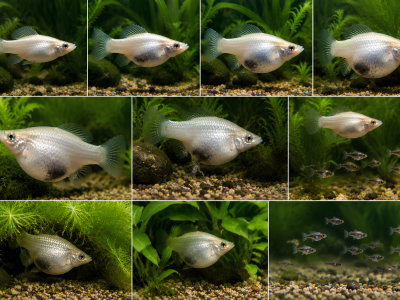
Maintaining the correct male-to-female ratio is essential for a healthy and peaceful Molly fish aquarium. Male Mollies are naturally active breeders and may constantly chase females if there are too few of them in the tank. Keeping one male with two or three females helps reduce stress, minimise aggression, and encourages successful breeding while creating a more balanced social environment.
Male Molly Fish
Male Molly fish should not outnumber females in the aquarium. Since males are persistent during courtship, keeping multiple males with too few females can lead to excessive chasing, territorial disputes, and unnecessary stress for the entire group.
-
Best Kept with Multiple Females - One male should be housed with two or three females.
-
Competes with Other Males - Rival males often compete for breeding opportunities.
-
May Harass Females - Excessive courtship can stress females if they cannot rest.
-
Needs Balanced Stocking - A proper ratio reduces aggression and improves tank harmony.
-
Avoid Too Many Males - Fewer males help minimise territorial behaviour.
-
Benefits from Larger Groups - More females spread the male's attention evenly.
-
Less Aggression in Proper Ratios - Balanced stocking reduces fighting between males.
-
Supports Successful Breeding - A suitable ratio increases breeding success while protecting females.
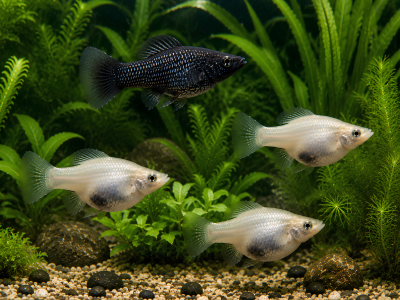
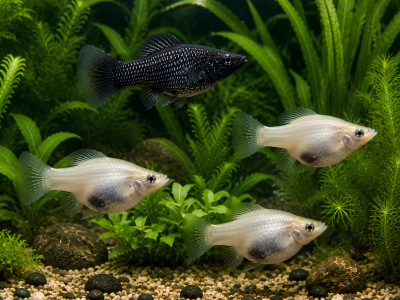
Female Molly Fish
Female Molly fish benefit from being kept in groups with fewer males. Having two or three females for every male reduces breeding pressure, allows females to recover between pregnancies, and creates a calmer, healthier community aquarium.
-
Ideal Ratio is 1 Male : 2 - 3 Females - The recommended ratio for healthy breeding and reduced stress.
-
Less Stress During Breeding - Females experience fewer interruptions from persistent males.
-
Better Fry Production - Healthy, less-stressed females are more likely to produce strong fry.
-
Peaceful Social Group - Female groups create a calmer aquarium environment.
-
More Time to Recover - Females can rest between pregnancies and breeding attempts.
-
Reduced Harassment - Multiple females share the male's attention, preventing excessive chasing.
-
Improved Overall Health - Lower stress contributes to stronger immunity and longer lifespan.
-
Ideal for Community Tanks - Balanced groups promote stable behaviour and peaceful interactions.
Faq
1. How can I tell if my Molly fish is male or female?
The easiest way is to check the anal fin. Male Molly fish have a long, pointed gonopodium, while females have a broad, fan-shaped anal fin.
2. What is the most accurate way to identify a male Molly fish?
The presence of a gonopodium is the most reliable and permanent feature for identifying a mature male Molly fish.
3. Are female Molly fish larger than males?
Yes. Adult female Molly fish usually grow larger, heavier, and have a broader body than males.
4. Why are male Molly fish slimmer than females?
Male Mollies have a streamlined body built for active swimming and courtship, while females have a rounder body designed for carrying fry.
5. What is a gonopodium in Molly fish?
A gonopodium is a modified anal fin found only in male Molly fish. It is used to transfer sperm during breeding.
6. Do female Molly fish have a gravid spot?
Yes. Pregnant female Molly fish develop a dark gravid spot near the anal fin, which becomes darker as birth approaches.
7. Can male Molly fish become pregnant?
No. Only female Molly fish become pregnant and give birth to live fry.
8. How many fry can a female Molly fish give birth to?
A healthy female Molly fish can give birth to approximately 20 - 100 fry in a single pregnancy.
9. How long is the pregnancy of a Molly fish?
The gestation period of a female Molly fish is typically 25 - 35 days.
10. Are male Molly fish more colourful than females?
Yes. Male Mollies generally display brighter colours and more vibrant fins than females, especially after reaching maturity.
11. Why do male Molly fish chase females?
Male Molly fish chase females as part of their natural courtship and breeding behaviour.
12. Do female Molly fish become aggressive?
Female Mollies are usually peaceful, although pregnant females may become slightly protective or seek hiding places before giving birth.
13. Which Molly fish has a larger dorsal fin?
Male Molly fish usually have a taller and more decorative dorsal fin, especially in Sailfin Molly varieties.
14. Can young Molly fish be sexed accurately?
It can be difficult to identify young Molly fish because many gender differences become visible only after they mature.
15. What is the ideal male-to-female ratio for Molly fish?
The recommended ratio is 1 male to 2 - 3 females to reduce stress, aggression, and excessive chasing.
16. Why is my female Molly fish's belly so round?
A naturally round belly is normal in females. If the belly continues to enlarge and a gravid spot appears, the fish is likely pregnant.
17. Do male and female Molly fish have different swimming behaviour?
Yes. Males are generally more active and energetic, while females swim more calmly and may rest more during pregnancy.
18. Can Molly fish breed in a community aquarium?
Yes. Molly fish breed easily in community aquariums if both males and females are present, although fry survival depends on tank conditions.
19. How do I prevent excessive breeding in Molly fish?
Keep only one gender in the aquarium or maintain the recommended male-to-female ratio to reduce breeding stress.
20. Why is it important to identify the gender of Molly fish?
Knowing the gender helps prevent unwanted breeding, reduce aggression, maintain proper stocking ratios, and provide better overall aquarium care.
Conclusion
Although male and female Molly fish may appear similar at first glance, their differences become much more noticeable as they mature. By carefully observing characteristics such as the gonopodium, body shape, overall size, fin structure, colour intensity, behaviour, belly shape, gravid spot, and breeding role, you can accurately determine your Molly fish's gender. Understanding these differences not only helps prevent unwanted breeding and reduces stress in the aquarium but also allows you to maintain the ideal 1 male to 2 - 3 females ratio for a healthier, more peaceful, and thriving community tank.